

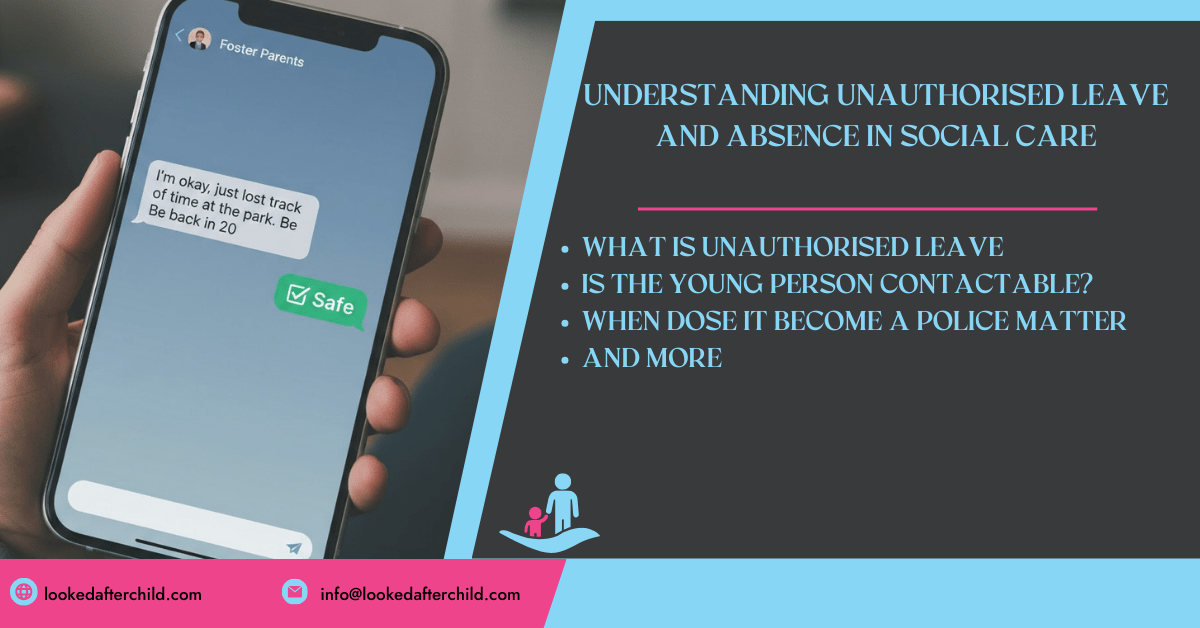
As a former child in care and now a professional in the sector, I know that the term "unauthorised leave" can feel heavy. For a young person, it can feel like a loss of freedom; for a professional or foster carer, it’s a period of high anxiety and responsibility.
At Looked After Child, we believe that clarity reduces crisis. This guide defines what unauthorised leave is, when it becomes a "missing person" matter, and how we can work together to keep our young people safe while respecting their growing need for independence.
Unauthorised leave (also commonly called unauthorised absence) occurs when a child or young person is not at their designated placement—such as a foster home, residential unit, or school—and has not received permission to be elsewhere.
In simple terms:
- Authorised Leave: You have permission to be away (e.g., staying at a friend’s house after a risk assessment).
- Unauthorised Leave: You have left without agreement, or you have failed to return at the agreed time.
If a child is not where they are supposed to be, the placement provider has a legal duty of care to report this to the Local Authority.
Is the Young Person Contactable?
Before escalating a situation, the first priority is always connection.
If a young person hasn't returned, carers should:
- Attempt Contact: Call or text the resident to ensure they are safe.
- Gauge Intent: Try to understand if they plan to return or if they are staying elsewhere.
- Identify Location: Ask where they are.
What if they won't disclose their location or aren't answering? If a young person is unreachable or refuses to say where they are, the risk level increases. Unless a Social Worker has provided specific alternative instructions, this usually triggers a Missing Persons Report (Misper).
When Does Absence Become a Police Matter?
Not every late return requires a 999 call. According to current guidance, the police generally do not need to be informed of an unauthorised absence unless:
- Their whereabouts or the reason for their absence is completely unknown.
- There is a clear, immediate risk of harm at their known location.
Filing a Misper (Missing Persons Report)
If you must contact the police:
- Provide as much detail as possible (clothing, last known associates, mental state).
- Crucial: Always record the Police Reference Number. You will need this for the Local Authority and the Out of Hours (OOH) team.
If you are a child in care, it can be frustrating to have your movements tracked so closely. However, your carers and social workers are legally required to risk assess your safety.
Your leave might be marked as unauthorised if:
- Safety Risks: You are with people who are known to put you in danger or you are considered a danger to the public.
- Lack of Planning: No prior notice was given, so no one could check if the place you are going is safe.
- Legal Status: You are under 18, considered vulnerable, or have a court order requiring you to be in Local Authority care.
Li’s Insight: "I remember feeling like I was being 'policed' rather than 'parented.' But looking back, those reports were the only way the adults in my life could ensure I wasn't being exploited. It’s about protection, not just rules."
If you feel your leave was unfairly marked as unauthorised, you have the right to be heard:
- Speak to your Carers: Ask for a "Return Interview" or a calm chat to explain where you were and why you didn't call.
- Contact your Social Worker: Explain your side of the story for the official record.
- Seek an Advocate: If you feel you aren't being listened to, contact an Independent Advocate. They are there to support your voice and ensure your rights are respected.

0 Comments