

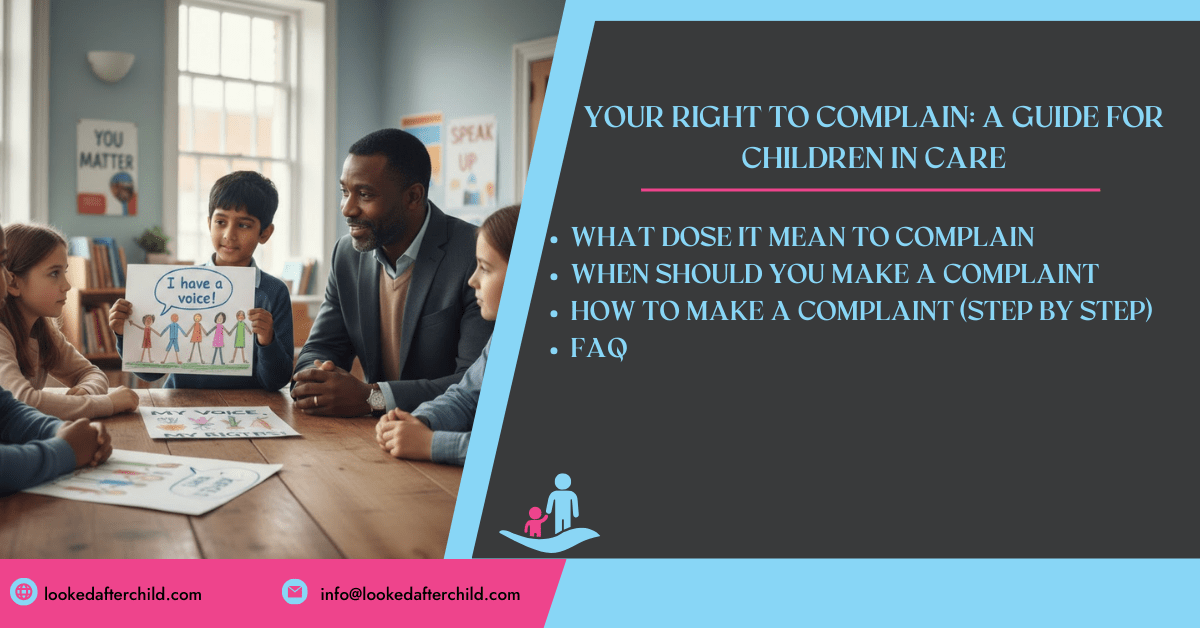
Hello, I’m Li Jean-Luc Harris. As someone who has navigated the care system myself and now works to support young people like you, I want to talk about something incredibly important: your voice.
Sometimes, things don’t go the way they should. Maybe you feel you aren't being listened to, or perhaps a decision was made about your life that feels unfair. I want you to know that you have a legal right to complain, and doing so is a sign of strength, not "being difficult."
What Does it Mean to Complain?
Complaining isn’t just about "moaning." In the care system, a complaint is a formal way of saying: "I am not happy with how I am being treated, and I want something to change."
When should you make a complaint?
You can make a complaint about almost anything that affects your life in care, such as:
- Changes to your placement that you weren't consulted on.
- Not seeing your family or friends as agreed in your care plan.
- Feeling unsafe or unhappy in your current home.
- A lack of support with your education or health.
- The way a professional talks to you or treats you.
How to Make a Complaint (Step-by-Step)
If you’re unhappy, you don't have to jump straight to a formal letter. Here is the best way to get heard:
1. Talk to Someone You Trust
Often, problems can be fixed quickly by speaking to your foster carer, residential worker, or Social Worker. Tell them clearly what is wrong and what you would like to happen.
2. Contact Your Independent Reviewing Officer (IRO)
Your Independent Reviewing Officer (IRO) is the person who checks your care plan. Their whole job is to make sure the local authority is doing right by you. You can call or email them directly to share your concerns.
3. Ask for an Advocate
This is one of the most important tools you have. An Advocate is someone independent (they don't work for the council) whose job is to stand by your side and help you say what you want to say.
Important Note: You have a legal right to an advocate when making a complaint. They make sure the "grown-ups" listen to you.
4. The Formal Complaint Process
Every local authority has a "Children’s Rights" or "Complaints" officer. If your problem isn't fixed by talking, you can start a formal process. This usually has three stages:
- Stage 1 (Local Resolution): The council tries to fix the problem within 10–20 working days.
- Stage 2 (Investigation): If you aren't happy with the Stage 1 result, an independent person investigates your complaint.
- Stage 3 (Review Panel): A panel of independent people looks at how your complaint was handled.
Frequently Asked Questions (FAQ)
Will I get in trouble for complaining?
No. It is illegal for anyone to punish you or treat you worse because you made a complaint. Your Social Worker and carers should actually encourage you to speak up.
What if I’m worried about what to say? Write it down first. You can use bullet points or even draw how you feel. Remember, your advocate can help you put your feelings into words.
Can I complain if I have already left care? Yes. Care-experienced adults can often complain about things that happened while they were in care, especially regarding their transition to adulthood (leaving care support).
My Personal Insight: Why Your Voice Matters
When I was in care, I sometimes felt like a passenger in my own life. It felt like "the system" was a big machine and I was just a cog inside it. But I learned that when I spoke up—clearly and with support—the machine had to stop and listen.
You are the expert on your own life. No one knows how you feel better than you do.
Frequently Asked Questions
What is my 'right to complain'?
Your 'right to complain' means you have the power to formally express dissatisfaction or concern about any aspect of your care or treatment without fear, and to expect a fair and timely response. It's about seeking improvements and ensuring your well-being is respected.
Who can I complain to if I'm in care?
You can complain to your social worker, an independent visitor, a trusted adult, the local authority, independent advocacy services (like Coram Voice or NYAS), or statutory bodies like Ofsted.
What happens after I make a complaint?
After you complain, an investigation will typically occur, you'll be kept informed, and receive a formal response with the outcome and actions. If unsatisfied, you usually have the right to appeal.
Do I need an adult to help me make a complaint?
While you can complain independently, it's often helpful to have support. Independent advocates are available to help you articulate your concerns and navigate the process, and you can also involve a trusted adult.
Will I get into trouble for making a complaint?
No, you should not get into trouble for making a complaint. Your right to complain is protected by law, and the process is designed to ensure your concerns are heard and addressed without negative repercussions.
[FAQPage JSON-LD Schema generated and bound to Post]Featured Snippet Target
Every child and young person in care possesses a fundamental right to complain if they are dissatisfied with any aspect of their care. This right empowers them to voice concerns, seek resolutions, and ensure their welfare and rights are upheld. Understanding the available channels, processes, and support systems is crucial for effectively exercising this vital entitlement.
Glossary of Terms
Independent Advocate: An impartial professional who helps children and young people express their views, wishes, and feelings, and supports them through formal processes like making a complaint.
Local Authority: The council or government body responsible for providing and overseeing social care services for children in a specific geographical area.
Children Act 1989: Key UK legislation that sets out the legal framework for the care and upbringing of children, emphasising their welfare and rights, including the right to complain.
Complaint Procedure: A formal, structured process established by organisations to receive, investigate, and resolve grievances or concerns raised by individuals.
Ofsted: The Office for Standards in Education, Children's Services and Skills, which inspects and regulates services that care for children and young people, and providers of education and skills for learners of all ages.
Next Steps
Empowering children and young people in care to understand and utilize their right to complain is essential for their well-being and for fostering a responsive care system. The next steps involve consistently promoting awareness of these rights, providing accessible information, and ensuring that robust, child-friendly complaints mechanisms are in place and actively supported by independent advocacy services. Continuous training for care professionals on handling complaints with sensitivity and effectiveness is also crucial to build trust and encourage children to voice their concerns without hesitation.
[Article JSON-LD Schema generated and bound to Post][ItemList JSON-LD Schema generated and bound to Hub]
Supporting Spoke Articles
- How to Make a Complaint: A Step-by-Step Guide for Children
- Who Can Help You: Advocacy and Support Services for Young Complainants
- Understanding Your Rights: Key Laws Protecting Children in Care
- What Happens Next: The Complaints Process Explained Simply
- Digital Tools and Safe Spaces: Complaining Online and Anonymously

0 Comments