

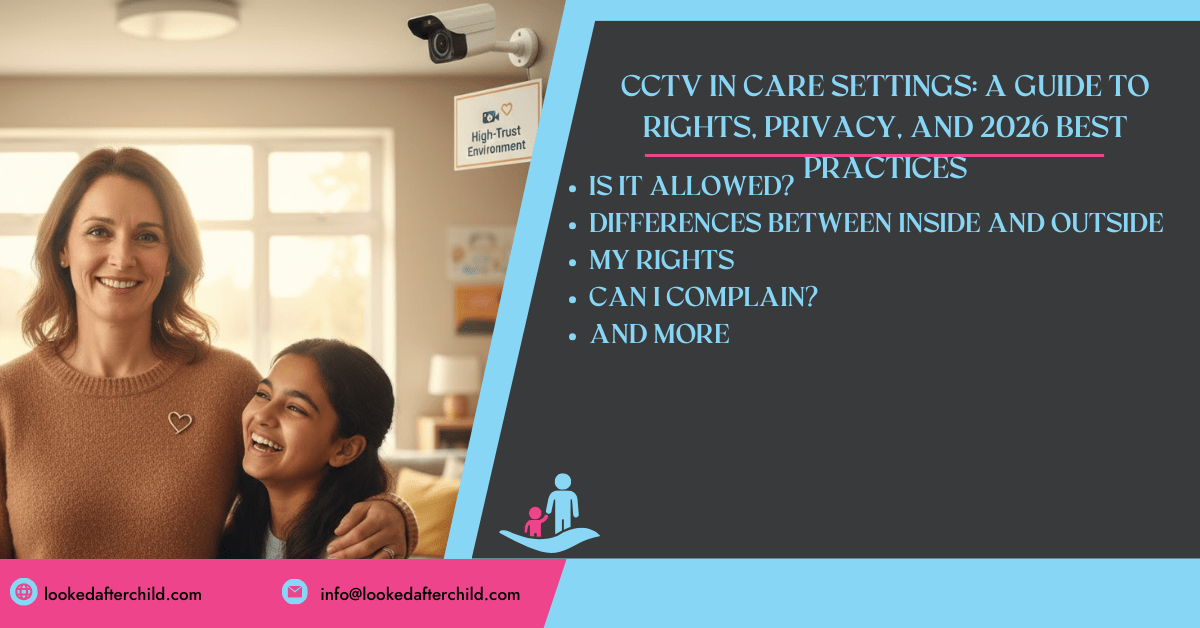
In the social care sector, the use of Closed-Circuit Television (CCTV) is a sensitive topic that balances the need for safeguarding with the fundamental right to privacy. Whether you are a professional managing a home or a young person living in one, understanding the rules ensures that technology is used to empower, not intrude.
Is CCTV Allowed in My Home?
The short answer is yes, but only under very strict conditions. CCTV must always be necessary and proportionate; it cannot be used as a default way to monitor behavior or as a substitute for human care.
- Children’s Homes: Regulation 24 of the Children’s Homes (England) Regulations 2015 allows surveillance only if it promotes the welfare of the child, has written consent from the placing authority, and is the least intrusive option available.
- Semi-Independent Living: Under the 2023 regulations, surveillance is strictly limited to communal areas and must be justified by specific safety needs.
- Foster Care: CCTV inside a foster home is generally not recommended as it contradicts the "ordinary family" environment. It is typically only permitted in exceptional circumstances—such as specific medical needs—and must be agreed upon by all parties in the Safer Care Plan.
Your Rights: What You Need to Know
If you are a young person in care, you have a right to privacy under Article 8 of the Human Rights Act.
| Your Right | What It Means in Practice |
| Right to be Informed | You must be told why cameras are there, where they are, and who watches the footage. |
| Right to Privacy | Cameras are never allowed in private areas like bedrooms, bathrooms, or toilets (except in very rare, court-approved medical cases). |
| Right to Consent | Depending on your age and understanding, professionals must seek your consent and that of your placing authority before using surveillance. |
| Right to Access | You can make a Subject Access Request (SAR) to see footage of yourself. |
Inside vs. Outside: Setting the Boundaries
The rules for CCTV change depending on whether the camera is looking at the garden or the living room.
1. Children’s Homes & Semi-Independent Living
- Inside the Home: Cameras may be used in communal areas (hallways, lounges) if justified for safeguarding. They are prohibited in bedrooms and bathrooms to protect your dignity.
- Outside the Home: External CCTV is common for protecting the building and preventing unauthorized visitors. Signs must be clearly displayed to inform the public.
2. Foster Care
- Inside the Home: CCTV is strongly discouraged and should generally be removed before a carer is approved. Any exception requires a formal report and agreement from the Head of Fostering.
- Outside the Home: Domestic security like Video Doorbells or driveway cameras is usually permitted for property protection, provided they are recorded in the Safe Care Plan.
Guidance for Professionals: Best Practice 2026
For social workers and residential staff, "watching" is not the same as "caring." In 2026, the Information Commissioner's Office (ICO) and CQC favor high-trust environments over high-surveillance ones.
- Conduct a DPIA: Before installation, you must complete a Data Protection Impact Assessment (DPIA) to document why the risk justifies the privacy intrusion.
- Human Oversight: CCTV should supplement, not replace, proper staffing. Unwatched footage does nothing to prevent harm in real-time.
- Data Security: All recordings must be stored securely (encrypted) and deleted as soon as they are no longer needed—typically within 30 days.
- Audio Recording: This is considered highly intrusive and should be switched off by default unless there is a critical, documented reason.
Li’s Insight: In my experience, the best "surveillance" is a strong relationship. A camera can tell you what happened, but a trusted adult can understand why. Use technology to support your eyes, not replace your heart.
FAQs: Common Questions
- Can staff use their personal phones for surveillance?No. Personal mobile phones should never be used for surveillance activity.
- What if a child or parent withdraws consent?Policies must include clear steps for what to do if consent is withdrawn, which often involves reviewing the necessity of the system.
- Can I complain if I don't like the cameras?Absolutely. You can speak to your Social Worker, Advocate, or the ICO. Every home must have a clear process for you to challenge surveillance.

0 Comments