

In the social care sector, data protection is not merely a bureaucratic requirement; it is a fundamental component of digital safeguarding. For those looking after children—whether in residential settings, foster care, or kinship care—the information we hold is often the most sensitive data imaginable. Handling this data correctly is a direct reflection of our commitment to the safety and privacy of the vulnerable children in our care.
As the Founder of Looked After Child, I have managed residential settings where the "Dual Lens" of professional compliance and lived experience informed every decision. This guide provides an executive-level framework for navigating the UK General Data Protection Regulation (UK GDPR) and the Data Protection Act 2018 (DPA 2018) within the 2026 digital landscape.
The Foundation: Why Data Protection is Safeguarding
The DPA 2018 and UK GDPR are designed to ensure that personal data is processed fairly, lawfully, and transparently. In our sector, "personal data" includes anything from a child’s placement history to their medical records and daily logs.
Failure to protect this data isn't just a legal risk; it’s a safeguarding failure that can compromise a child’s "digital footprint" and their physical safety.
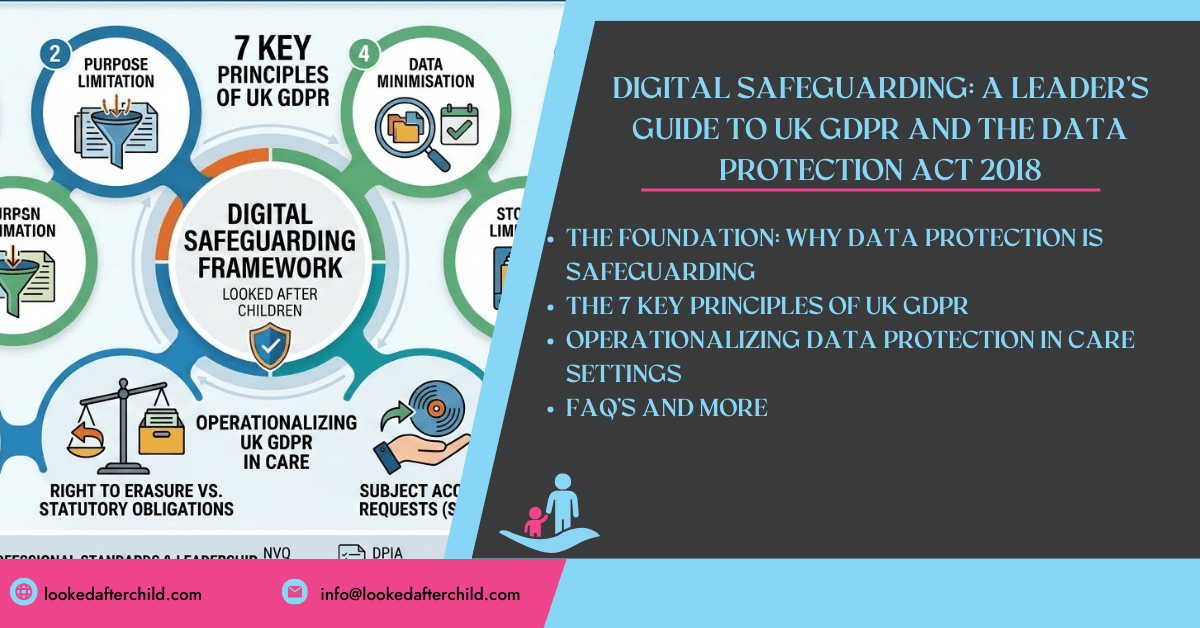
The 7 Key Principles of UK GDPR
To maintain high standards of E-E-A-T (Experience, Expertise, Authoritativeness, and Trustworthiness), every care professional must embed these seven principles into their daily practice:
- Lawfulness, Fairness, and Transparency: You must have a valid legal reason to process a child’s data and be open about how it is used.
- Purpose Limitation: Data should only be collected for specified, explicit, and legitimate purposes (e.g., fulfilling a Care Plan).
- Data Minimisation: Only collect the data that is strictly necessary. If you don't need to know a specific detail to provide care, don't record it.
- Accuracy: Records must be kept up-to-date. Inaccurate data in a social care context can lead to poor decision-making for a child’s future.
- Storage Limitation: Do not keep personal data longer than is necessary. Follow your local authority's retention schedules strictly.
- Integrity and Confidentiality (Security): This is the "Security Principle." Use encrypted devices, secure passwords, and never share sensitive files over unencrypted platforms.
- Accountability: As a leader or carer, you must be able to demonstrate how you are complying with these principles.
Operationalizing Data Protection in Care Settings
Moving from theory to practice requires a trauma-informed, operational approach. Here is how we translate the DPA 2018 into the "House Manager" reality:
1. Managing "Special Category" Data
Health data, racial or ethnic origin, and religious beliefs are classified as Special Category Data. This requires higher levels of protection. Ensure that access to these files is restricted only to those who "need to know" to provide effective care.
2. The Right to Erasure vs. Statutory Obligations
Children have the "right to be forgotten," but in social care, this is often superseded by statutory requirements to maintain records for several decades (often up to 75 years after a child leaves care). It is vital to explain this distinction to young people in an age-appropriate, transparent way.
3. Subject Access Requests (SARs)
Care-experienced individuals have a right to access their records. When processing a SAR, we must redact third-party information to protect the privacy of others while ensuring the individual receives the clarity they deserve regarding their own history.
In 2026, a child's digital footprint is a major concern. Avoid posting identifying information, school uniforms, or location-tagged photos of children in care. This aligns with the UK Online Safety Act and prioritizes the long-term privacy of the child.
Professional Standards & Leadership
As professionals with NVQ Level 4 standards or higher, our role is to act as the "Data Controller" or "Data Processor" with the utmost integrity. This means:
- Conducting Data Protection Impact Assessments (DPIA) before introducing new tracking software or apps.
- Reporting any data breaches to the Information Commissioner’s Office (ICO) within 72 hours if the breach poses a risk to the rights and freedoms of the child.
By treating data with the same respect we treat the children themselves, we move from mere "compliance" to a culture of systemic safety.
Frequently Asked Questions (FAQ)
Q: Can I share a child’s information with their teacher without a formal meeting? A: Yes, if it is in the child’s best interest and falls under the "Lawfulness" principle (e.g., providing necessary support). However, ensure you only share what is relevant and record the disclosure in the child’s file.
Q: What should I do if I lose a work phone containing sensitive reports? A: This is a data breach. You must immediately notify your Data Protection Officer (DPO) or Manager so the device can be remotely wiped and the incident can be assessed for reporting to the ICO.
Q: Does a foster parent need to register with the ICO? A: Generally, no. Foster parents are usually seen as an extension of the fostering agency or local authority, who act as the Data Controller. However, you must still adhere to the agency's data protection policies.
Q: Can a young person ask to see their daily logs? A: Yes. Under the UK GDPR, they have a right to access data held about them. This should be handled sensitively, often with a professional present to help them process the information.
Q: How do I handle data protection when using AI tools for report writing? A: Never input identifiable data (names, specific dates, addresses) into public AI tools. If your organization uses a "closed" AI environment, follow their specific security protocols.
Frequently Asked Questions
What is the primary difference between UK GDPR and the Data Protection Act 2018?
The UK GDPR sets out the core principles and rights for data protection, directly applicable in the UK. The Data Protection Act 2018 complements the UK GDPR, providing specific national derogations and further provisions, particularly for areas like sensitive data, law enforcement, and national security, ensuring the UK's data protection framework operates effectively.
Why is digital safeguarding particularly critical for leaders in the care sector?
Digital safeguarding is paramount in the care sector due to the highly sensitive nature of the personal data handled (e.g., health records, personal circumstances of vulnerable individuals) and the increased reliance on digital tools for care delivery. Leaders must protect this data to prevent harm, maintain trust, and comply with strict legal obligations.
What are the key responsibilities of a leader regarding UK GDPR and DPA 2018 compliance?
Leaders are responsible for establishing and maintaining a robust data protection framework, including developing policies, ensuring staff training, conducting DPIAs, managing data breaches, and overseeing third-party compliance. They must foster a culture of data protection and demonstrate accountability for all data processing activities within their organisation.
What are the potential consequences of non-compliance with UK GDPR and DPA 2018?
Non-compliance can lead to significant financial penalties, with fines up to £17.5 million or 4% of annual global turnover, whichever is higher. Additionally, it can result in severe reputational damage, loss of public trust, legal action from affected individuals, and, most critically, potential harm to the individuals whose data has been compromised.
[FAQPage JSON-LD Schema generated and bound to Post]Featured Snippet Target
Digital safeguarding is a critical responsibility for leaders, particularly under UK GDPR and the Data Protection Act 2018. It involves implementing robust policies, training staff, and managing data ethically to protect individuals, especially the vulnerable, from digital harms and data breaches. Compliance ensures legal adherence, maintains trust, and mitigates significant risks for organizations.
Glossary of Terms
UK GDPR: The United Kingdom General Data Protection Regulation, which is the retained EU law version of the GDPR that applies in the UK post-Brexit, governing how personal data is collected, stored, and processed.
Data Protection Act 2018 (DPA 2018): The UK's national law that complements the UK GDPR, setting out additional provisions for data protection, particularly in areas like sensitive data, law enforcement, and national security, and establishing the Information Commissioner's Office (ICO) as the regulatory authority.
Digital Safeguarding: The proactive measures, policies, and practices implemented to protect individuals from harm and risks in online and digital environments, encompassing data protection, cybersecurity, and ethical technology use.
Data Protection Impact Assessment (DPIA): A process designed to help organisations identify and minimise the data protection risks of a project or plan, required under UK GDPR when data processing is likely to result in a high risk to individuals' rights and freedoms.
Information Commissioner's Office (ICO): The UK's independent authority set up to uphold information rights in the public interest, promoting openness by public bodies and data privacy for individuals.
Next Steps
To further strengthen your organisation's digital safeguarding posture, review your existing data protection policies against the insights provided, identify areas for improvement in staff training, and consider conducting an internal audit of your data processing activities. Engage with your Data Protection Officer or legal counsel to ensure full alignment with UK GDPR and DPA 2018 requirements, and actively explore the detailed guidance offered in our related spoke articles.
[Article JSON-LD Schema generated and bound to Post]Frequently Asked Questions
What is the primary difference between UK GDPR and the Data Protection Act 2018?
The UK GDPR is a regulation that sets out the core principles and rights for data protection, largely mirroring the EU GDPR but adapted for the UK post-Brexit. The Data Protection Act 2018 is the UK's national law that complements the UK GDPR, providing further details and specific provisions, such as exemptions, criminal justice processing rules, and the powers of the ICO.
Who is responsible for digital safeguarding in an organisation?
While specific roles like the Data Protection Officer (DPO) have defined responsibilities, digital safeguarding is ultimately a collective responsibility. However, leaders hold the primary accountability for establishing the framework, policies, and culture that ensure effective digital safeguarding across the entire organisation.
What is 'Privacy by Design' and why is it important for digital safeguarding?
'Privacy by Design' means integrating data protection and privacy considerations into the design and architecture of systems, services, and processes from the very outset. It's crucial for digital safeguarding because it ensures that data protection is proactive, preventative, and embedded, rather than being an afterthought, thereby reducing risks from the start.
What are the key steps to take in the event of a data breach?
In the event of a data breach, key steps include immediate containment of the breach, assessment of its nature and scope, notifying the Information Commissioner's Office (ICO) within 72 hours if there's a risk to individuals' rights and freedoms, and notifying affected individuals without undue delay if there's a high risk. Detailed record-keeping of all actions is also essential.
How can leaders foster a culture of digital safeguarding?
Leaders can foster a culture of digital safeguarding by leading by example, providing continuous and tailored training, encouraging open communication about digital risks, empowering staff to report concerns, and engaging all stakeholders in promoting safe digital practices. This moves beyond mere compliance to a shared organisational value.
[FAQPage JSON-LD Schema generated and bound to Post]Featured Snippet Target
Digital safeguarding is paramount for leaders navigating the complexities of UK GDPR and the Data Protection Act 2018. This guide provides essential insights into legal compliance, risk management, and fostering a protective digital environment, ensuring robust data privacy and child protection within organisations.
Glossary of Terms
UK GDPR: The United Kingdom General Data Protection Regulation, the primary law governing data protection and privacy in the UK, largely mirroring the EU GDPR.
DPA 2018: The Data Protection Act 2018, a UK national law that complements the UK GDPR, providing further specific provisions and exemptions.
Data Breach: A security incident where sensitive, protected, or confidential data is copied, transmitted, viewed, stolen, or used by an individual unauthorised to do so.
Privacy by Design: An approach to systems engineering that incorporates privacy protections throughout the entire design and development process of technologies, products, and services.
DPIA: Data Protection Impact Assessment, a process which helps to identify and minimise the data protection risks of a project, particularly when processing is likely to result in a high risk to individuals' rights and freedoms.
Next Steps
Continually assess and refine your organisation's digital safeguarding practices, staying informed about evolving legal requirements and technological advancements, to ensure sustained compliance and the highest level of protection for all stakeholders.
[Article JSON-LD Schema generated and bound to Post]Frequently Asked Questions
What is the primary difference between UK GDPR and the Data Protection Act 2018?
UK GDPR sets the main framework for data protection in the UK, while the DPA 2018 supplements it by providing specific derogations, exemptions, and additional provisions tailored to the UK legal system.
Why is digital safeguarding particularly important for leaders in sectors involving vulnerable individuals?
Vulnerable individuals, such as children or care leavers, are at higher risk of harm from digital threats, requiring leaders to implement stricter controls and more comprehensive protective measures to meet legal and ethical obligations.
What is the role of a Data Protection Officer (DPO) in digital safeguarding?
A DPO advises on data protection obligations, monitors compliance, and acts as a contact point for supervisory authorities and data subjects, playing a critical role in ensuring an organization's digital safeguarding practices adhere to legal requirements.
How often should an organization review its digital safeguarding policies?
Digital safeguarding policies should be reviewed regularly, ideally annually, or whenever there are significant changes in technology, legal requirements, or organizational practices, to ensure they remain effective and compliant.
While personal accountability can vary by organization structure and severity, leaders bear ultimate responsibility for establishing a culture of compliance. Directors can face significant fines and reputational damage for severe or systemic failures, and in some cases, individual penalties.
[FAQPage JSON-LD Schema generated and bound to Post]Featured Snippet Target
Digital Safeguarding is critical for leaders navigating the complexities of UK GDPR and the Data Protection Act 2018, particularly within sectors involving vulnerable individuals. This guide offers essential insights into legal obligations, risk management, and strategic implementation to ensure robust data protection and digital safety across an organization.
Glossary of Terms
UK GDPR: The United Kingdom General Data Protection Regulation, the primary law governing data protection and privacy in the UK, effective from 1 January 2021.
Data Protection Act 2018 (DPA 2018): A UK law that supplements the UK GDPR, providing specific provisions, derogations, and exemptions tailored to the UK legal system.
Digital Safeguarding: The proactive measures taken to protect individuals, especially vulnerable groups, from harm and abuse online, encompassing data protection, cyber security, and appropriate digital conduct.
Data Protection Officer (DPO): An individual appointed by an organization to inform and advise on data protection obligations, monitor compliance, and act as a contact point for data subjects and supervisory authorities.
Data Subject: An identified or identifiable natural person to whom personal data relates, whose data is collected, held, or processed by an organization.
Next Steps
To deepen your organization's digital resilience, consider subscribing to our compliance updates, attending our advanced workshops on data protection, and exploring tailored consultation services to ensure your policies and practices remain at the forefront of digital safeguarding excellence.
[Article JSON-LD Schema generated and bound to Post]Frequently Asked Questions
What is the primary difference between UK GDPR and the Data Protection Act 2018?
UK GDPR is the retained EU law, setting the overarching framework for data protection. The Data Protection Act 2018 (DPA 2018) is the UK's national law that supplements the UK GDPR, covering areas where the UK has discretion, such as specific exemptions, processing for national security, and detailed provisions for children's data and special categories of personal data.
Why is digital safeguarding particularly critical for leaders in care settings?
Digital safeguarding is critical in care settings due to the highly sensitive nature of the personal data processed (e.g., health records, safeguarding concerns) and the vulnerability of the individuals involved. Leaders must ensure this data is protected to maintain trust, prevent harm, comply with legal obligations, and avoid severe penalties and reputational damage.
What are the key responsibilities of a leader in ensuring UK GDPR and DPA 2018 compliance for digital safeguarding?
Leaders are responsible for establishing a strong data protection culture, appointing a DPO, developing and enforcing robust policies, conducting DPIAs, ensuring appropriate staff training, managing data breaches effectively, and demonstrating accountability through comprehensive record-keeping and governance structures.
How does the Data Protection Act 2018 specifically address children's data in a safeguarding context?
The DPA 2018 includes specific provisions for processing children's data, such as requiring parental consent for online services for children under 13 (in some contexts) and outlining conditions for processing special category data (like health information) when necessary for safeguarding purposes, even without explicit consent, under certain circumstances.
[FAQPage JSON-LD Schema generated and bound to Post]Featured Snippet Target
Leaders in care settings must proactively navigate the complex landscape of digital safeguarding, ensuring robust data protection practices align with UK GDPR and the Data Protection Act 2018. This guide offers essential insights into fulfilling legal obligations, mitigating risks, and fostering a secure digital environment for all individuals, particularly children and vulnerable adults, emphasizing the critical role of leadership in compliance and ethical data handling.
Glossary of Terms
UK GDPR: The retained EU law version of the General Data Protection Regulation, which sets out the key principles and requirements for processing personal data in the United Kingdom.
Data Protection Act 2018 (DPA 2018): The UK's national law that supplements the UK GDPR, detailing specific provisions and exemptions for data processing, including those related to children's data and safeguarding.
Digital Safeguarding: The protection of individuals from harm and abuse online and through the use of digital technology, encompassing data protection, cybersecurity, and responsible digital practices.
Special Category Data: Personal data revealing racial or ethnic origin, political opinions, religious or philosophical beliefs, trade union membership, genetic data, biometric data for identification, health data, and data concerning a person's sex life or sexual orientation, which receive enhanced protection under UK GDPR.
Data Protection Impact Assessment (DPIA): A process designed to identify, assess, and mitigate data protection risks for processing operations that are likely to result in a high risk to individuals' rights and freedoms.
Next Steps
To further enhance your organisation's digital safeguarding framework, leaders should immediately review current data processing activities against UK GDPR and DPA 2018 requirements. Consider conducting an internal audit of existing policies and procedures, identifying areas for improvement, and prioritising staff training initiatives. Engage with your Data Protection Officer or seek expert legal advice to address specific compliance challenges. Proactively exploring the insights provided in supporting articles on data breach management, DPIAs, consent, training, and technology adoption will equip you with the practical knowledge to build a truly resilient and compliant digital safeguarding strategy for your organisation.
[Article JSON-LD Schema generated and bound to Post][ItemList JSON-LD Schema generated and bound to Hub]
Supporting Spoke Articles
- Data Breach Management Strategies for Digital Safeguarding
- Implementing Data Protection Impact Assessments (DPIAs) in Care Settings
- Consent and Data Sharing in the Digital Safeguarding Era
- Training and Awareness: Building a Data Protection Culture
- Technology and Digital Safeguarding: Best Practices for Secure Adoption

0 Comments