In the world of social care, acronyms are everywhere. Two of the most common you will encounter are LAC (Looked After Child) and CLA (Child Looked After). While the terms are often used interchangeably depending on your Local Authority, the importance of the Review process attached to them remains...
Residential Child Care
Data protection and safeguarding best practices specifically for residential child care managers and staff.
decoding the “sections”: what do they actually mean?
If you are care-experienced, or working in the sector, you’ve probably heard people throwing numbers around like they are nicknames. "He’s on a Section 20," or "We’re going for a Section 31." When you are the young person in the middle of it, these numbers can feel like labels that define you. But...
What is a looked after child / Child In Care
Navigating the terminology of the UK social care system can often feel like learning a new language. Whether you are a foster carer, a residential childcare worker, or a family member, you will frequently hear terms like "Looked After Child" (LAC) and "Child in Care". While these terms are often...
Understanding Section 31 Care Orders: A Comprehensive Guide
A Section 31 Care Order also know as a full care order is a significant legal measure in the UK that grants the local authority responsibility for a child's care. This means decisions about the child's upbringing, including where they live, their education, and their healthcare, are made by the...
Understanding Section 20 Accommodation under the Children Act: Your Guide to Protecting Children’s Rights
Do you know what Section 20 accommodation under the Children Act entails? If you work with child protection, knowing this provision is crucial for safeguarding children's rights. This guide will explain Section 20 accommodation and how it protects vulnerable children. Section 20 accommodation is...
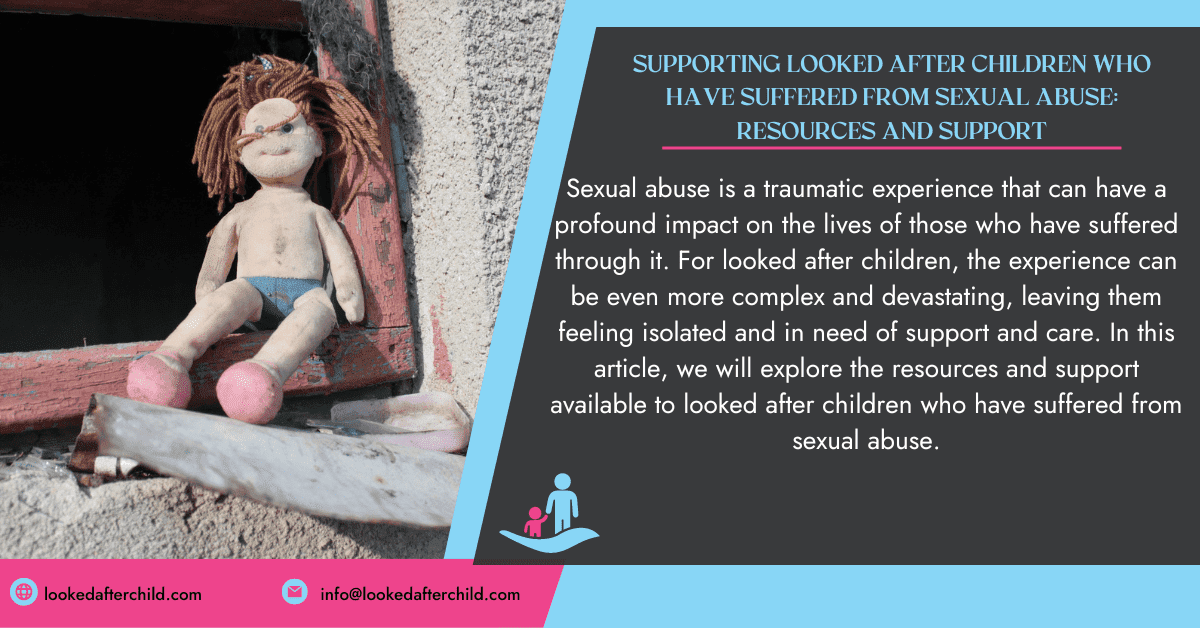
Supporting Looked After Children who have suffered from Sexual Abuse: Resources and Support
Sexual abuse is a traumatic experience that can have a profound impact on the lives of those who have suffered through it. For looked after children, the experience can be even more complex and devastating, leaving them feeling isolated and in need of support and care. In this article, we will...
Placement Disruption Meetings
Sometimes Placements just don’t work out, and that’s fine. A Disruption meeting will be called when a placement is close to breaking down or has ended abruptly this will normally happen prior to a Stability meeting but can be escalated straight to a disruption meeting depending on the placements Warning Procedures or the circumstance of the issue
Placement Stability Meeting
A Placement Stability Meeting will be called when the placement of a child in foster care, residential or a semi-independence placement is considered to be at risk of disrupting.
The Difference between a Job And a Career
As humans, we spend half our lives working hard to make it through life. but one way to make your working life easier is settling for the long term into a career. but below I will explain the differences from working in Job Compared to a career. A Job Doesn't normally have good benefits Doesn't...
Authorised Leave
Authorised Leave means: that your local Authority knows your staying away from your placement, and agree that it is safe to do so. Home / Background Checks Required. social workers normally will want to conduct a police check to...
Misper – Missing Persons Report
A MISPER is short for Missing persons. when a person goes missing we would follow a procedure
When curfew arrives and the resident is not in the home. We should try to contact them to see where they are. if they are staying out the residential placement, has it been allowed by the local authority?