

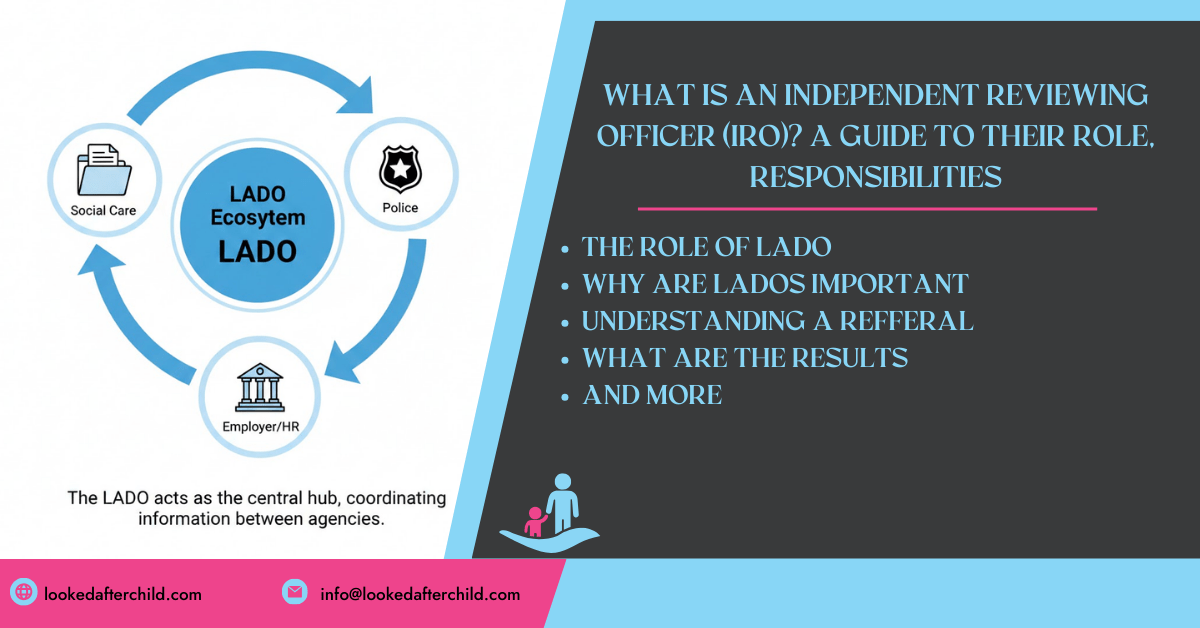
A Local Area Designated Officer (LADO) is a statutory role within the UK children’s services. Their primary responsibility is to manage and oversee allegations made against adults who work with children (whether in a paid or voluntary capacity). The LADO ensures that all allegations are handled fairly, quickly, and consistently to safeguard children while supporting the adults involved.
If you are a residential care worker, a foster parent, or a family member involved with social services, hearing the term “LADO” can be daunting. In my years navigating the care system, I’ve seen that fear often comes from a lack of clarity.
Whether you are a professional facing an allegation or a parent wanting to know who keeps safeguards in check, this guide breaks down the LADO’s role without the jargon.
Table Of Contents
What is the Role of a LADO?
In 2026, transparency in social care is more vital than ever. The LADO acts as the “manager of the process,” ensuring that agencies don’t investigate themselves without oversight.
The LADO does not investigate the allegation personally. Instead, they:
- Receive alerts: They are the first point of contact when an allegation is made.
- Coordinate: They bring together the police, social workers, and employers to decide on the next steps.
- Monitor: They track the progress of the case to prevent unnecessary delays.
- ** advise:** They provide guidance to employers on whether a staff member should be suspended or can remain at work.
Why Are LADOs Important?
For our children in care, consistency is everything. The LADO provides a safety net that ensures allegations aren’t swept under the rug, nor are professionals unfairly targeted without due process.
- For Children: They ensure that any adult who may pose a risk is identified and managed swiftly.
- For Professionals: They provide an objective set of eyes, ensuring that an employer follows fair procedures during an investigation.
Understanding LADO Referrals
A referral to the LADO is triggered when an adult who works with children has allegedly:
- Behaved in a way that has harmed a child, or may have harmed a child.
- Possibly committed a criminal offense against or related to a child.
- Behaved towards a child or children in a way that indicates they may pose a risk of harm to children.
The Process (Step-by-Step):
- Incident Occurs/Disclosed: An allegation is made.
- Referral: The employer or designated safeguarding lead contacts the LADO (usually within 24 hours).
- Initial Strategy Meeting: The LADO consults with the police and social care to determine if a criminal investigation or a social work assessment is needed.
- Investigation: The employer, police, or social care carries out the investigation.
- Conclusion: The LADO records the outcome.
What Are the Results of a LADO Referral?
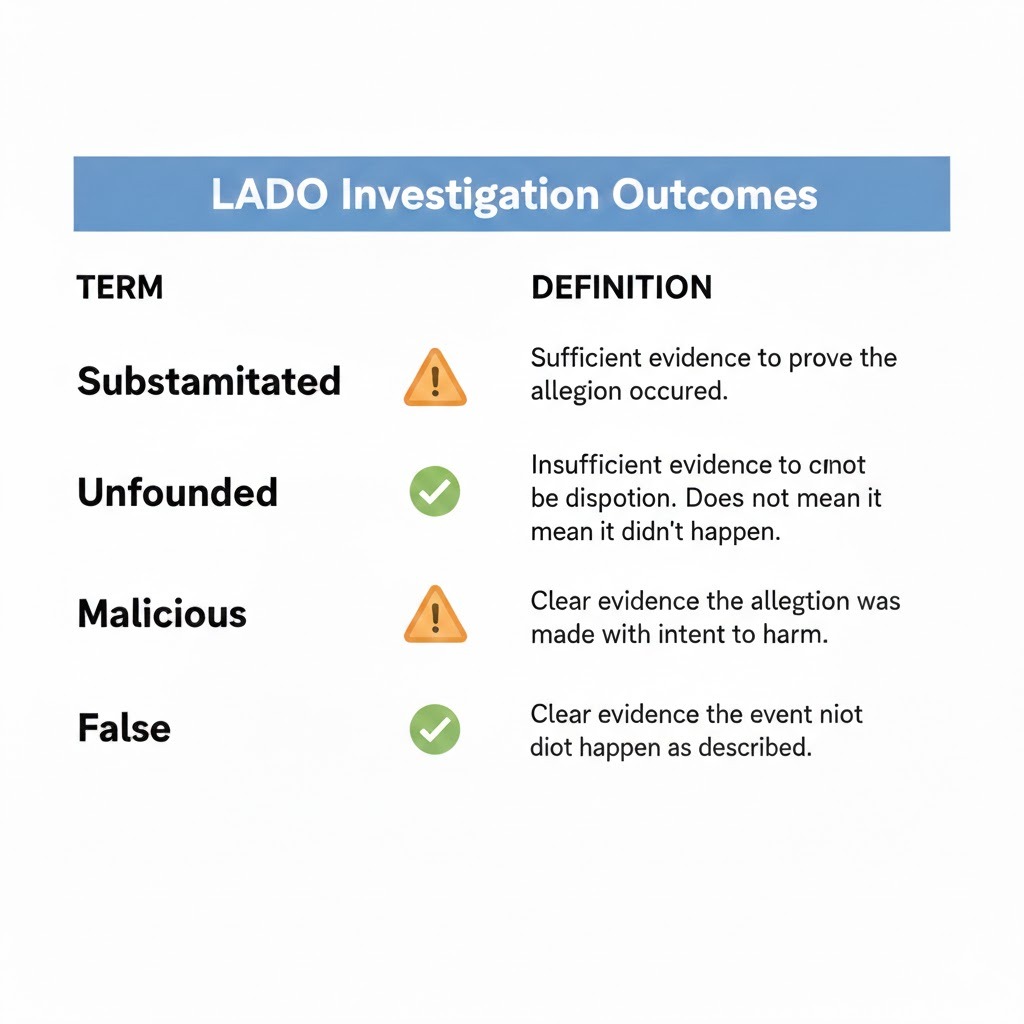
Once the investigation concludes, the LADO will record one of the following outcomes. Understanding these terms is crucial for professionals worried about their DBS (Disclosure and Barring Service) checks.
- Substantiated: There is sufficient evidence to prove the allegation.
- Unsubstantiated: There is insufficient evidence to prove or disprove the allegation (this does not imply guilt or innocence).
- Unfounded: There is no evidence or proper basis to support the allegation.
- Malicious: There is clear evidence that the allegation was made deliberately to cause harm or distress.
- False: There is sufficient evidence to disprove the allegation.
How to Work With the LADO
Whether you are a manager making a referral or a staff member involved in one, cooperation is key.
For Professionals and Managers:
- Be Timely: Do not delay. Referrals should usually be made within one working day.
- Keep Records: accurate, factual note-keeping is your best defense and tool.
- Do Not Investigate Yet: Do not start interviewing the child or the staff member before speaking to the LADO, as this can contaminate criminal evidence.
For Families:
- Ask for Updates: While the LADO primarily works with professionals, you are entitled to know the outcome of an investigation involving your child.
- Trust the Process: It can feel slow, but the LADO is legally bound to ensure the investigation is thorough.
Frequently Asked Questions
Can a LADO fire a staff member? No. The LADO advises on the process and safeguarding risks. The decision to dismiss an employee remains with the employer (HR), based on the investigation’s findings.
Is a LADO referral permanent? Records are kept by the local authority for a specific period (often until the person reaches retirement age or for 100 years depending on the nature of the allegation), specifically to spot patterns of behavior over time.

0 Comments