Discover vital self-care strategies tailored for frontline care professionals to combat secondary trauma and compassion fatigue, ensuring sustained well-being and high-quality service.
Staff Wellbeing
Focuses on the mental and physical health and support for professionals working in demanding care roles.
Distinguishing Between Burnout, Compassion Fatigue, and Secondary Trauma: A Professional’s Guide
Distinguishing between burnout, compassion fatigue, and secondary trauma is crucial for professionals in helping roles. This guide defines each, outlining their distinct causes, symptoms, and impacts. Understanding these differences allows for targeted prevention and intervention strategies, safeguarding individual well-being and ensuring effective, sustainable care provision within demanding environments.
Building Psychological Safety for Service Users and Staff
Discover how to build and maintain psychological safety for both service users and staff within care pathways, fostering environments of trust, open communication, and empowerment for improved well-being and care outcomes.
Building Resilience: A Comprehensive Guide to Managing Secondary Trauma and Compassion Fatigue in Care Professionals
This comprehensive guide offers essential strategies for care professionals to understand, prevent, and manage secondary trauma and compassion fatigue, fostering resilience and sustaining high-quality care.
Staff Training and Development: Evidencing Competence for ‘Outstanding’ Ratings
Discover how to evidence staff competence and robust training programs to achieve an ‘Outstanding’ Ofsted rating. This article details strategies for professional development, performance management, and impact assessment, ensuring your team consistently meets and exceeds regulatory standards.
Navigating the Storm: A Guide to Allegations in Social Care
This comprehensive guide explores the critical process of navigating allegations within social care, covering everything from initial reporting and thorough investigation to providing essential support for all involved parties and implementing preventative measures. Learn how to maintain professional standards and safeguard vulnerable individuals effectively.
The Role of Leadership in Fostering a Trauma-Informed Organizational Culture
Explore how leadership is pivotal in cultivating a trauma-informed organizational culture. This article delves into the strategies leaders employ to embed principles of safety, trust, and empowerment, ensuring environments that support healing and prevent re-traumatization for both staff and service users.
Implementing Trauma-Informed Practices in Social Care Settings
Discover practical strategies for integrating trauma-informed practices within social care settings to foster healing, prevent re-traumatization, and enhance service user outcomes through a systemic shift in approach.
The Role of Leadership in Cultivating an ‘Outstanding’ Culture
Discover how effective leadership is the cornerstone of cultivating an ‘Outstanding’ culture in care settings, driving vision, staff empowerment, continuous improvement, and robust safeguarding practices.
Understanding the Role of the Designated Safeguarding Lead (DSL)
Discover the pivotal responsibilities of the Designated Safeguarding Lead (DSL) in protecting children. This article delves into their critical duties, essential skills, training requirements, and the challenges they face in fostering a safe environment for all young people.
Mastering Trauma-Informed Care Pathways: A Comprehensive Framework for Professionals
Discover a comprehensive framework for implementing Trauma-Informed Care Pathways, designed to transform service delivery, foster healing, and prevent re-traumatization across social care and mental health sectors.
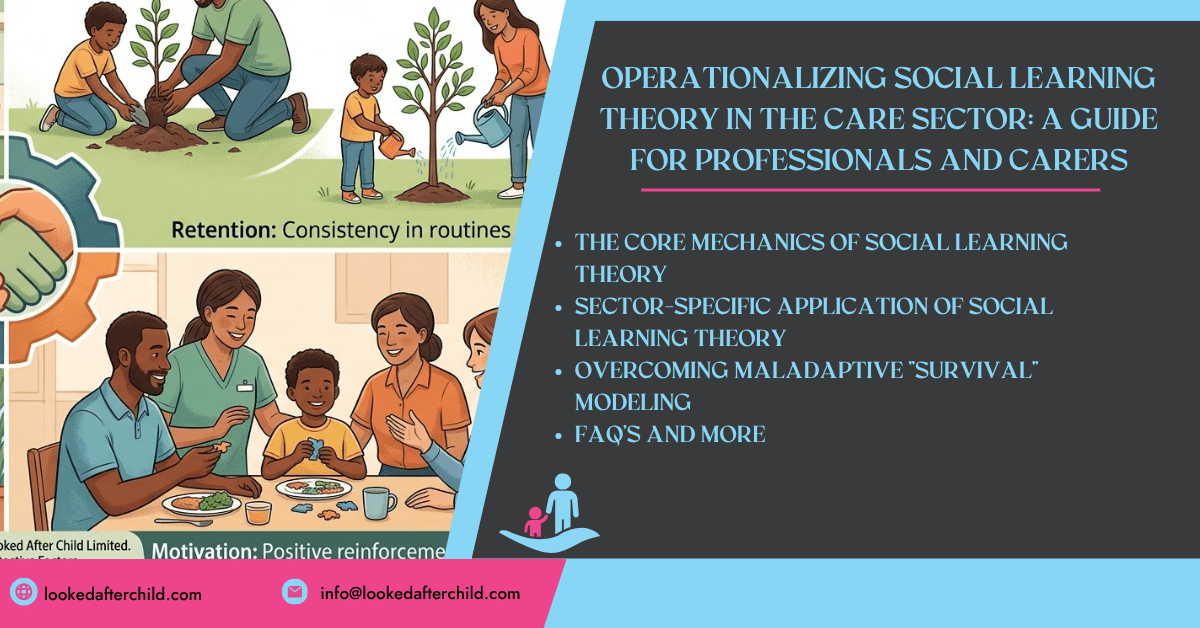
Operationalizing Social Learning Theory in the Care Sector: A Guide for Professionals and Carers
Social Learning Theory, pioneered by Albert Bandura, establishes that individuals learn behaviors, emotional reactions, and attitudes through the observation and imitation of others. For professionals and carers looking after children, this theory is not just an academic concept; it is the...