

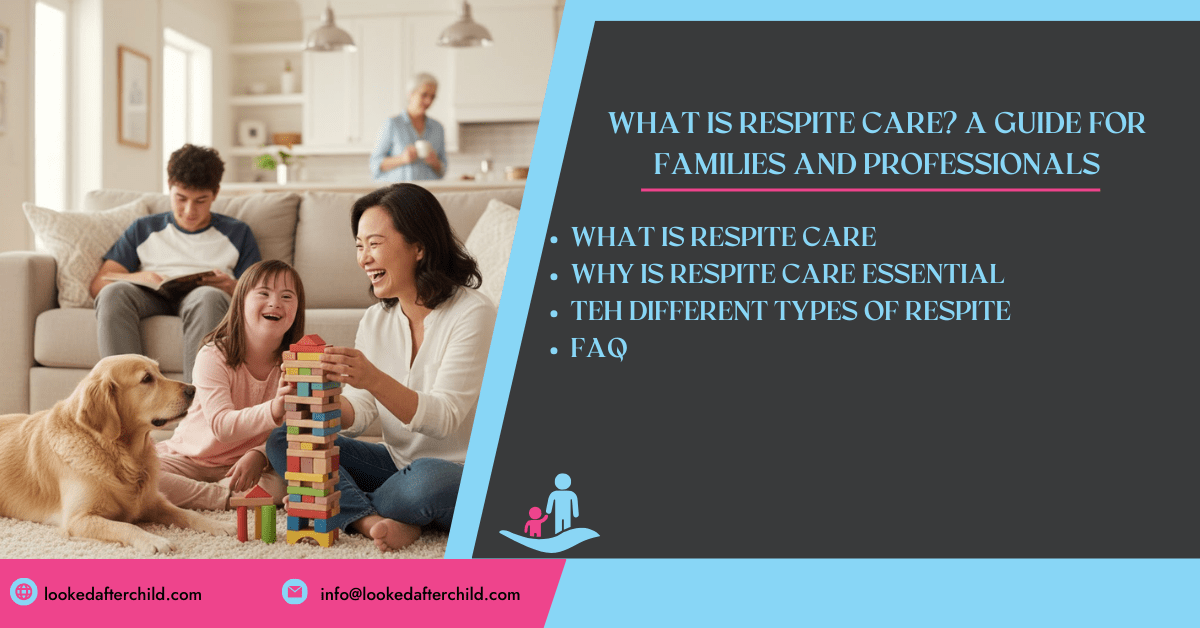
If you are a parent navigating social services involvement or a dedicated professional in the residential childcare sector, you’ve likely heard the term “respite care”. But what does it actually mean for the child and the adults supporting them?
At Looked After Child, we believe that respite isn’t just a “break”—it’s a vital support system designed to sustain placements and provide children with enriching new experiences. Having lived through the care system myself, I know that the word “respite” can sometimes feel clinical or even daunting to a child. My goal today is to demystify this service and show how it builds stronger, more resilient care environments.
Table Of Contents
What is Respite Care?
Respite care is a formal arrangement where a child in care or a child living with their birth family spends a short, pre-planned period with a different caregiver. This can range from a few hours a week to a full weekend. Its primary purpose is to provide the main caregivers with a temporary break to recharge, while ensuring the child remains in a safe, supportive, and’ nurturing environment.
Why is Respite Care Essential?
In 2026, we understand more than ever that “it takes a village”. Respite care is a proactive tool, not a reactive one. It solves real-world problems by preventing burnout and placement breakdowns.
- For Families and Foster Carers: It provides the “breathing space” needed to maintain their own mental health, ensuring they can continue providing high-quality care in the long term.
- For the Child: It offers a chance to build new relationships, develop social skills, and engage in different activities.
- For Professionals: It acts as a stabilizing force in a care plan, reducing the likelihood of emergency moves which can be traumatic for the young person.
The Different Types of Respite
Understanding the “intent” behind a search for respite is key. Depending on your specific needs, respite might look like:
| Type of Respite | Best For… |
| Dayer/Sessional | A few hours of support during the day for appointments or rest. |
| Overnight/Weekend | Longer breaks that allow for a complete reset for the primary household. |
| Emergency Respite | Short-term care provided during a sudden family crisis or illness. |
| Specialist Respite | Tailored support for children with specific medical or behavioral needs. |
Moving Beyond the Stigma
From my own experience, I remember feeling a sense of “rejection” when the word respite was first mentioned. As professionals and parents, we must frame this correctly.
Li’s Insight: We shouldn’t tell a child, “I need a break from you.” Instead, we should say, “You’re going to have a fun weekend with [Carer Name] where you get to do [Activity].”
By using conversational, natural language, we can reduce the anxiety surrounding these transitions.
Frequently Asked Questions (FAQs)
How long does respite care usually last? It varies based on the care plan, but it typically lasts from a few hours to a maximum of two weeks.
Is respite care the same as foster care? Respite is a form of foster care, but it is temporary. The child returns to their primary home once the respite period ends.
Who pays for respite care? In most cases involving social services, the local authority or the fostering agency funds the respite as part of the child’s support package.

0 Comments