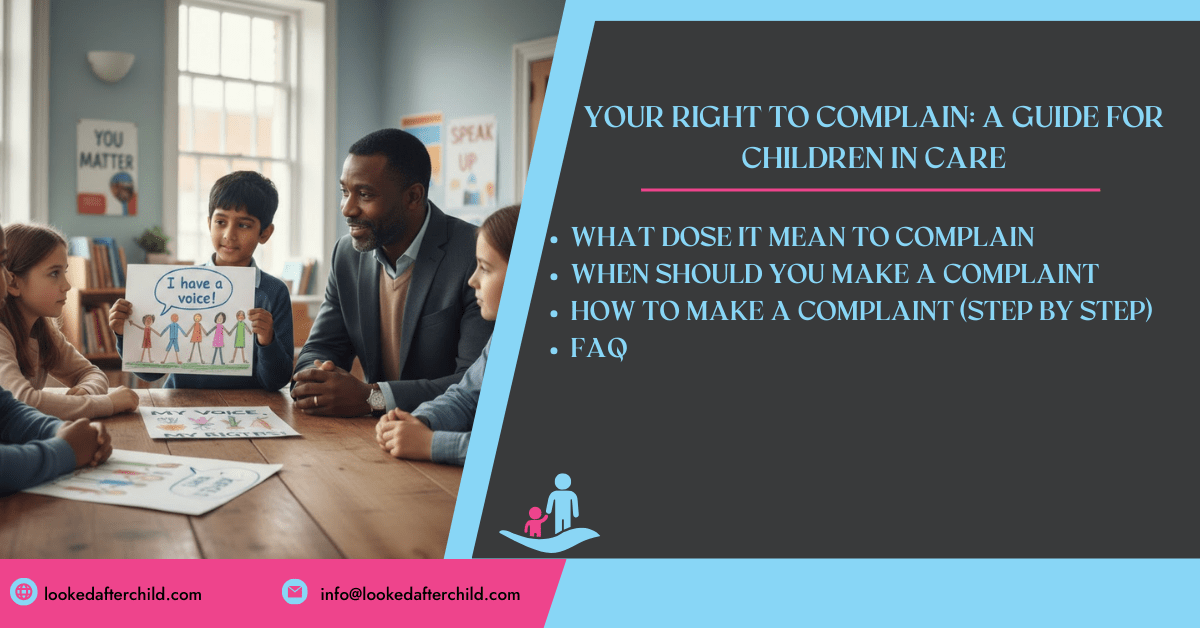
A comprehensive guide for children in care on understanding and exercising their right to complain, detailing processes, support systems, and how to advocate for their well-being.
Foster Care
Resources and guidance specifically for foster parents to support them in caring for children with complex needs.
Can You Be Successful After Being in Care? Inspirational Stories for Care-Experienced Youth
As someone who has walked this path, I know that being "in care" can sometimes feel like a label that limits your future. But I’m here to tell you—and show you—that your history is not your destiny. Being in care does not stop you from achieving greatness; in fact, the resilience you develop can...
How to Build Resilience While Living in Care: Your Guide to Staying Strong
```html Growing up in care comes with a unique set of challenges, but it also gives you a chance to build incredible inner strength. Building resilience in care means developing the ability to bounce back from difficult situations, manage stress, and keep moving forward toward your goals. While it...
Supporting LGBTQ+ Youth in the Care System
Discover comprehensive strategies for supporting LGBTQ+ youth in the care system. This guide explores the unique challenges faced by these vulnerable individuals and outlines essential principles, practical implementations, and policy reforms needed to foster truly inclusive and affirming environments for their well-being and development.
What Does “Staying Put” Mean?
```html "Staying Put" is an arrangement that allows a young person to continue living with their former foster carers after they turn 18. Instead of being required to move out into independent living on their 18th birthday, this arrangement enables them to remain in a stable, familiar environment...
Coming Home: A Guide to the Reunification Process
This comprehensive guide explores the critical ‘Coming Home: A Guide to the Reunification Process’, detailing its phases, the essential support systems, and the collaborative efforts required to safely return children from out-of-home care to their families, ensuring long-term stability and well-being.
Understanding Solo and Complex Placements in Social Care: A Guide for the Care Community
In the landscape of social care, few topics carry as much weight—or as much misunderstanding—as solo and complex placements. As someone who has lived through the care system and now advocates within it, I know that when a child is moved into a solo setting, it can feel isolating for the young...
CCTV in Care Settings: A Guide to Rights, Privacy, and 2026 Best Practices
In the social care sector, the use of Closed-Circuit Television (CCTV) is a sensitive topic that balances the need for safeguarding with the fundamental right to privacy. Whether you are a professional managing a home or a young person living in one, understanding the rules ensures that technology...
Navigating Ofsted: A Compass for Families and Professionals in 2026
This comprehensive guide navigates Ofsted’s evolving role in 2026, offering essential insights for families interpreting reports and professionals aiming for compliance and excellence in education and children’s social care.
Safer Recruitment in Social Care: Building a Circle of Safety Around Our Children
As someone who has lived through the care system and now works to improve it, I know that "recruitment" isn't just a HR process—it is the first line of defense for a child’s safety. Whether it is a foster home, a residential unit, or a semi-independent placement for a young person finding their...
Navigating the Storm: A Guide to Allegations in Social Care
```html As someone who has walked the halls of residential care and sat on both sides of the table, I know that the word "allegation" is perhaps the most frightening term in a professional’s vocabulary. It’s a moment where time seems to stop, and your commitment to the children you care for feels...
What is a LADO? A Guide for Families and Professionals
A Local Area Designated Officer (LADO) is a statutory role within the UK children's services. Their primary responsibility is to manage and oversee allegations made against adults who work with children (whether in a paid or voluntary capacity). The LADO ensures that all allegations are handled...