

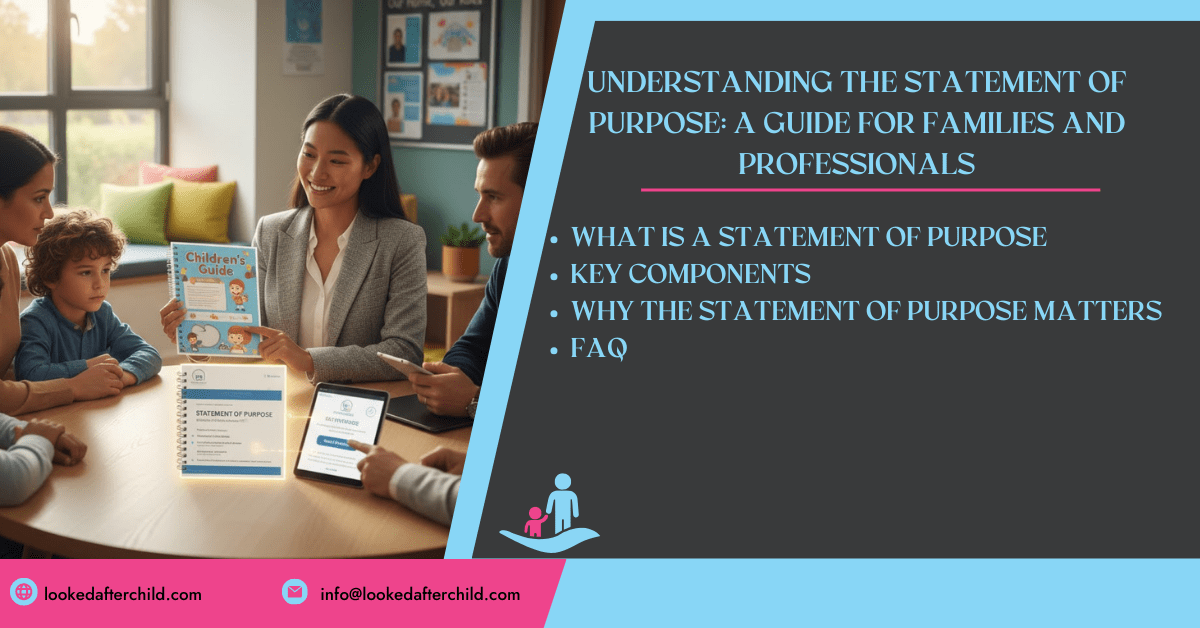
The phrase “Statement of Purpose” might sound like a dry, legal requirement, but in the world of residential childcare, it is actually the most important document a home possesses. It is the “DNA” of a children’s home, outlining exactly how they will care for, protect, and support the children living there.
As someone with lived experience in the care system, I know that for a parent or a young person, walking into a new home feels overwhelming. The Statement of Purpose (SoP) is designed to remove that mystery, providing a transparent promise of what life in that home will truly look like.
Table Of Contents
What is a Statement of Purpose?
A Statement of Purpose is a formal document required by law that describes the aims, objectives, and ethos of a residential children’s home. It serves as a contract of care between the provider, the local authorities, and the families they serve.
To be effective in 2026, a SoP must be more than just a folder on a shelf; it must be a “living” guide that is easily accessible and understood by everyone, including the children themselves.
Key Components of a Statement of Purpose
According to regulatory standards, a high-quality SoP must include:
- The Ethos and Outcomes: What is the home trying to achieve? Whether it’s focused on therapeutic recovery or preparation for independence, the goal should be clear.
- The Staffing Structure: Who is looking after the children? This includes the qualifications, experience, and training of the team.
- Care Standards: Details on how the home handles education, health, and religious needs.
- Safeguarding Procedures: Clear protocols on how children are kept safe and how complaints are handled.
- The Referral Process: Information on the types of needs the home can—and cannot—support.
Why the Statement of Purpose Matters
For Professionals
For social workers and commissioning teams, the SoP is a vital tool for placement matching. It allows you to see if a home’s specific expertise aligns with a child’s unique Care Plan. A transparent SoP reduces the risk of placement breakdown by ensuring the home is actually equipped to handle the child’s specific challenges.
For Families
If your child is moving into a residential home, the SoP is your right to know. It gives you a benchmark to hold the home accountable. It should answer your most pressing questions: Who will my child talk to? How is their education supported? How will we stay in touch?
For Care-Experienced Young People
Every child should have access to a “Children’s Guide” version of the SoP. This should be written in a way that empowers them, explaining their rights and what they can expect from the adults caring for them in a way that isn’t bogged down by “social work-speak.”
Li’s Perspective: More Than Just Compliance
In my work at Looked After Child, I always remind providers that while the SoP is a legal necessity, it is also an opportunity to build trust. A home that writes with warmth and clarity shows they value the humans behind the “case files.”
Pro Tip: When reviewing a Statement of Purpose, look for the “Experience” factor. Does the document mention how they incorporate the voices of the children currently living there? That is the hallmark of a truly outstanding home.
Frequently Asked Questions (FAQ)
Can I request to see a home’s Statement of Purpose? Yes. Any registered children’s home must provide their Statement of Purpose to parents, social workers, and inspectors (like Ofsted) upon request.
How often should a Statement of Purpose be updated? It should be reviewed at least annually or whenever there is a significant change in the way the home operates or the type of care provided.
What is the difference between an SoP and a Children’s Guide? The SoP is the full technical and legal document. The Children’s Guide is a simplified, age-appropriate version of the SoP designed specifically for the young people living in the home.

0 Comments