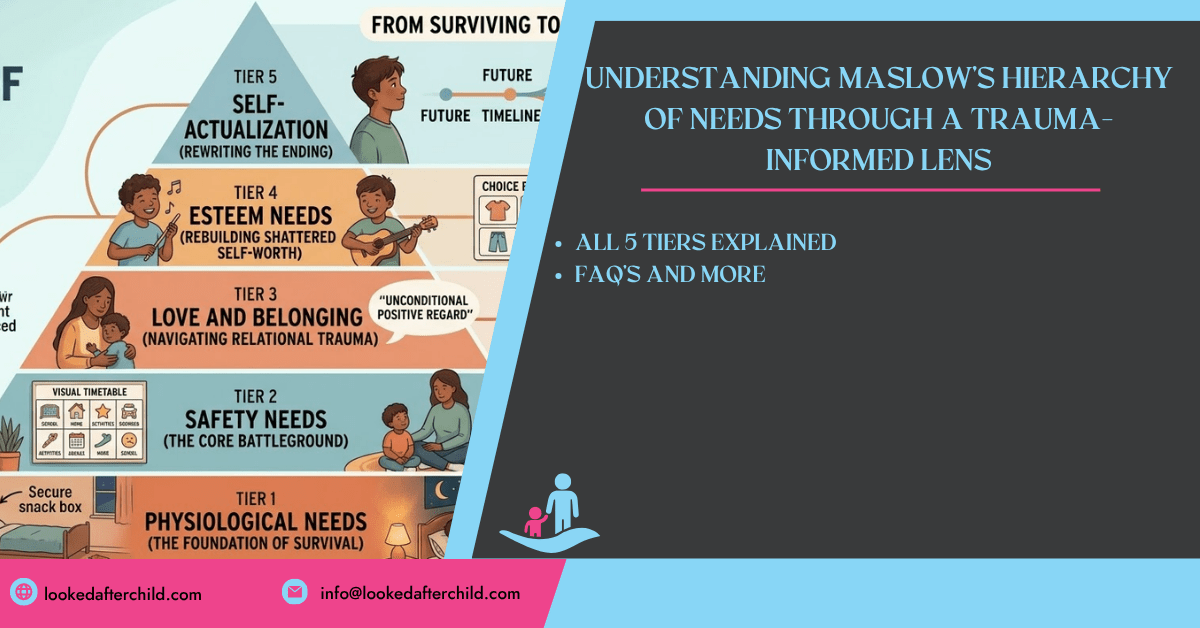
Emotional Regulation

Techniques and strategies to help children manage and express their emotions constructively.

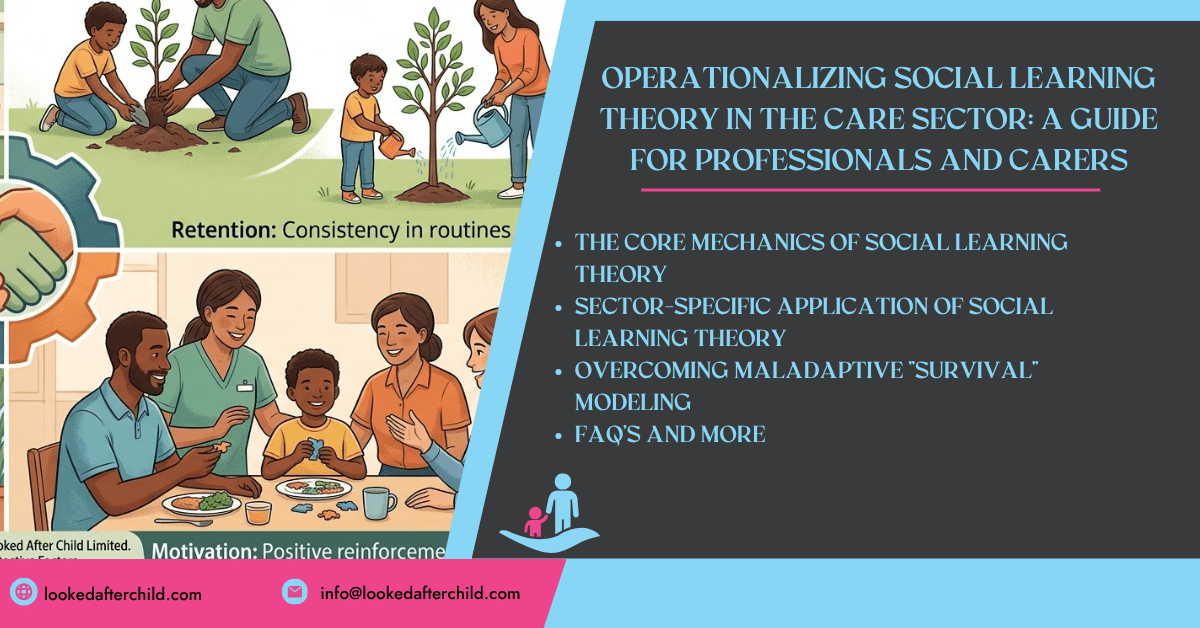
Infographic titled 'Operationalizing Social Learning Theory in the Care Sector: A Guide for Professionals and Carers'. It features illustrations of a man and boy planting a tree, a boy watering a plant, and a diverse family sharing a meal, representing consistency in routines and positive reinforcement. The guide outlines key topics: core mechanics of social learning theory, sector-specific application, overcoming maladaptive 'survival' modeling, and FAQs, providing essential trauma-informed tools for supporting children in care.

Operationalizing Social Learning Theory in the Care Sector: A Guide for Professionals and Carers

Social Learning Theory, pioneered by Albert Bandura, establishes that individuals learn behaviors, emotional reactions, and attitudes through the observation and imitation of others. For professionals and carers looking after children, this theory is not just an academic concept; it is the...

read more...
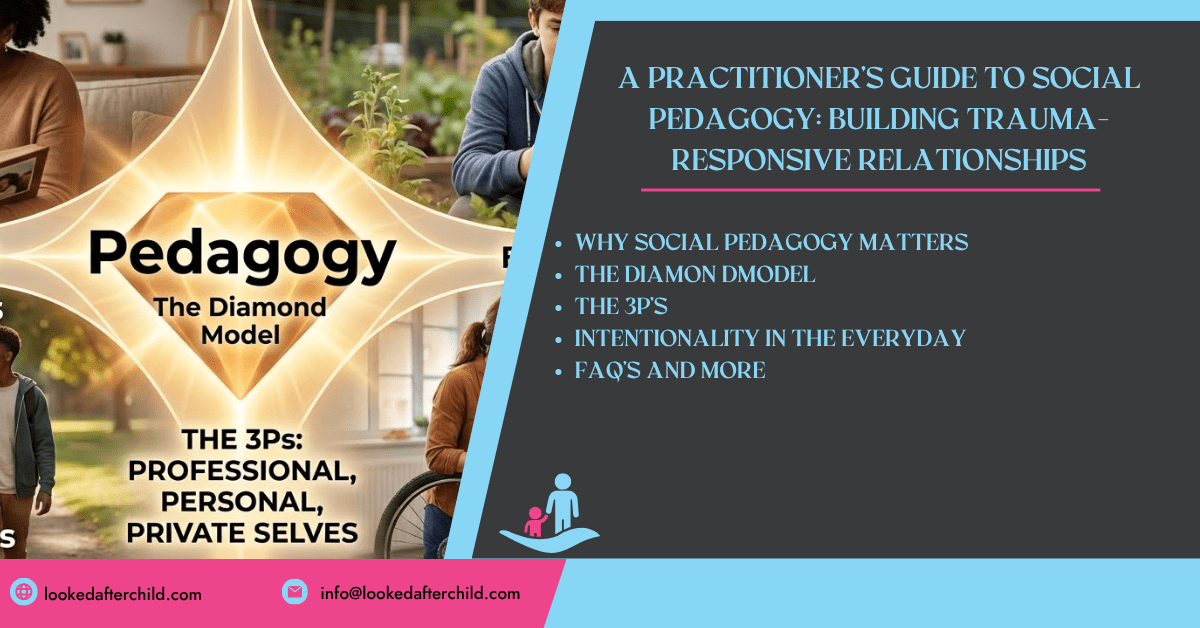
Promotional graphic for 'A Practitioner's Guide to Social Pedagogy: Building Trauma-Responsive Relationships' from Looked After Child Limited. The design features a glowing diamond labeled 'Pedagogy The Diamond Model' surrounded by images of diverse individuals, illustrating 'The 3Ps: Professional, Personal, Private Selves'. The guide's topics include why social pedagogy matters, the Diamond Model, the 3Ps, intentionality in everyday practice, and FAQs, offering trauma-informed tools for professionals in child care.

A Practitioner’s Guide to Social Pedagogy: Building Trauma-Responsive Relationships

Social pedagogy is a holistic framework for working with children and young people that integrates education and care into a single professional practice . It focuses on the "head, heart, and hands" to support the development of the whole person through meaningful, everyday relationships . In the...

read more...
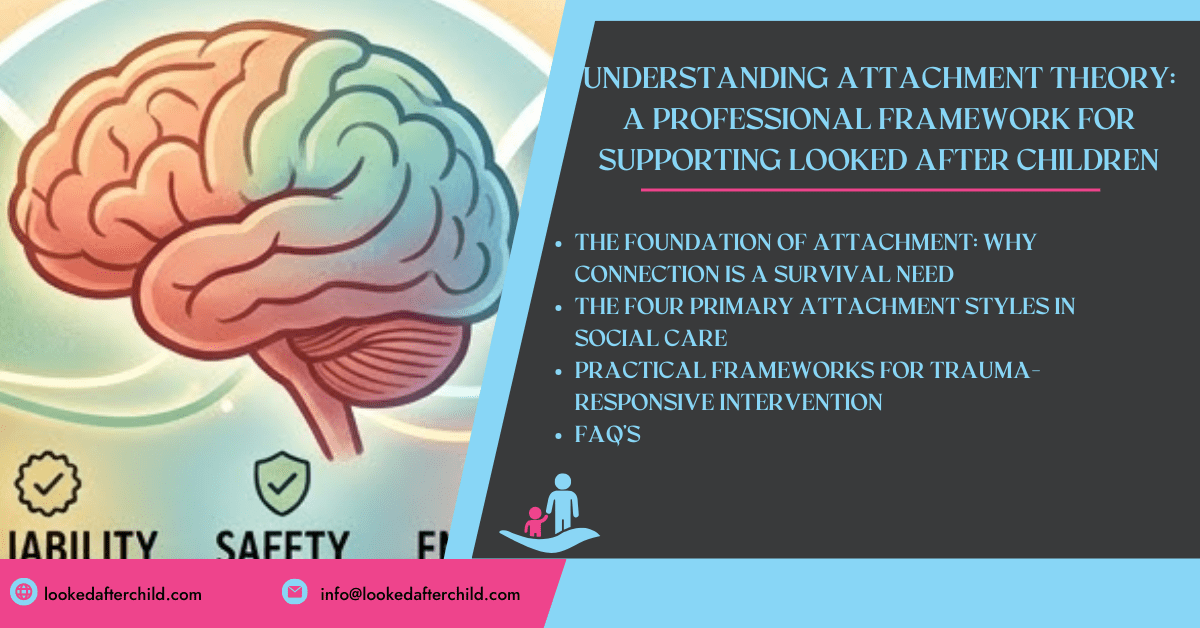
A professional graphic titled 'Understanding Attachment Theory: A Professional Framework for Supporting Looked After Children,' featuring a stylized brain illustration. The graphic outlines key topics including the foundation of attachment as a survival need, the four primary attachment styles in social care, practical trauma-responsive intervention frameworks, and FAQs, providing essential guidance for professionals working with vulnerable children.

Understanding Attachment Theory: A Professional Framework for Supporting Looked After Children

Attachment theory is the fundamental psychological framework used to understand how the quality of early relationships between a child and their primary caregiver dictates the child's lifelong emotional, social, and cognitive development . For professionals in the social care sector—including...

read more...
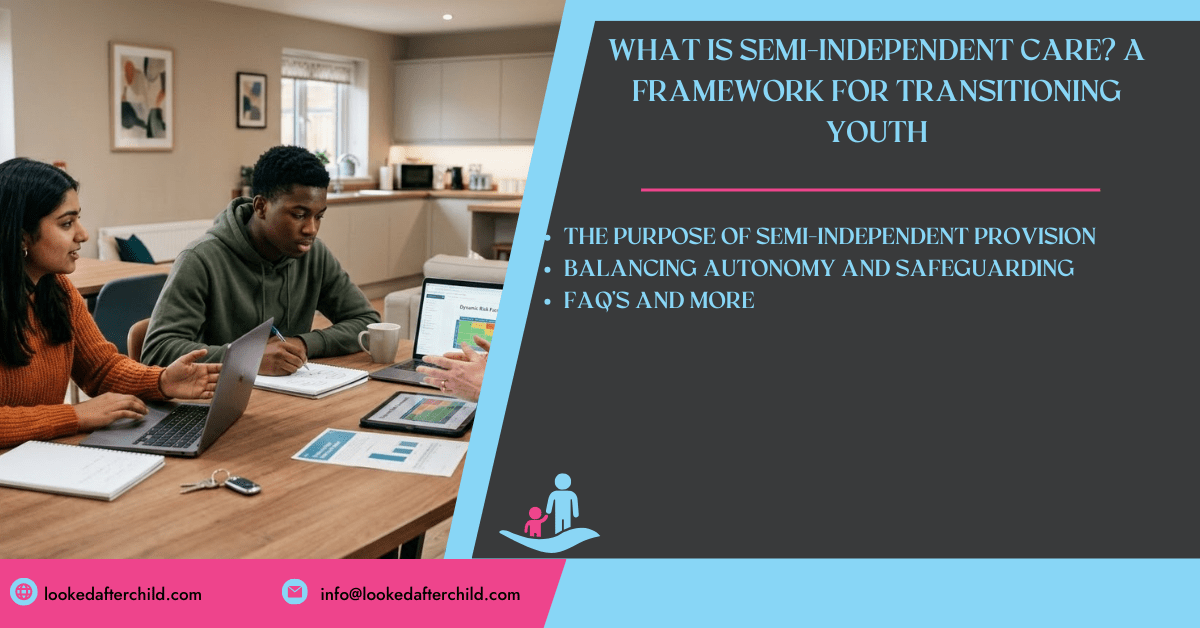
Two young adults, one female and one male, are shown collaborating with laptops and notebooks, symbolizing learning and support. The image prominently features the title 'What is Semi-Independent Care? A Framework for Transitioning Youth,' alongside bullet points detailing its purpose, the balance between autonomy and safeguarding, and FAQs, providing a visual and textual resource for professionals in child care.

What is Semi-Independent Care? A Framework for Transitioning Youth

```html Semi-independent care is a structured, transitional accommodation provision designed for young people—typically aged 16 to 18—who are preparing to leave the statutory care system. It bridges the critical gap between heavily supported placements, such as foster care or children's homes, and...

read more...
Icon depicting an adult and child holding hands, cradled by a protective hand, symbolizing the trauma-informed support and care provided for children in care by Looked After Child Limited.

Make a Lasting Difference


Every child deserves an environment where they feel safe, heard, and valued. Sign up to the Looked After Child Limited newsletter to learn more about our fostering and residential care communities, receive guidance on starting your career in care, and discover how you can support positive outcomes for vulnerable young people.

You have Successfully Subscribed!