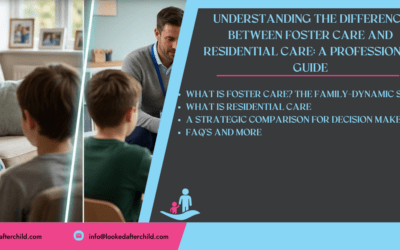
```html The primary difference between foster care and residential care lies in the environmental structure and the framework of therapeutic support. Foster care places a child within a family home environment with approved foster carers, offering a highly personalized, family-dynamic setting....
Children in Care
Resources and information specifically tailored for the needs and experiences of children within the care system.
Understanding Section 20 Accommodation under the Children Act: Your Guide to Protecting Children’s Rights
Section 20 of the Children Act 1989 is a voluntary legal provision where a local authority provides temporary accommodation for a child when their parents are temporarily unable to care for them, or when there is no one with parental responsibility. Crucially, this arrangement does not involve a...
The Digital Passport: A Professional Overview
```html As the Director of Looked After Child Limited, I have spent over seven years on the frontline—from NVQ Level 4 leadership to the daily realities of managing a residential home. I have seen the "paper trail" of a child's life fail them repeatedly during transitions. In 2026, we are finally...
What is a Waking Night Shift in Residential Childcare?
A waking night shift is a period of professional duty where a staff member remains fully awake and alert throughout the night to ensure the safety, wellbeing, and emotional support of children in a residential setting. Unlike a "sleep-in" shift, the staff member does not go to bed; they are...
What Does a Sleep-In Shift Involve?
A sleep-in shift typically begins in the evening and ends the following morning. While the staff member is there to rest, they are "on-call" to respond immediately to any incidents, emotional distress, or emergencies that arise during the night. Key Features of a Sleep-In: Presence and Safety: The...
The Care Leaver Covenant: Your Guide to Support and Opportunities
What is the Care Leaver Covenant? The Care Leaver Covenant is a national inclusion programme in England designed to support young people aged 16 to 25 as they transition from the care system to independent living. It is a formal "promise" made by private, public, and voluntary sector organisations...
Your Right to Complain: A Guide for Children in Care
A comprehensive guide for children in care on understanding and exercising their right to complain, detailing processes, support systems, and how to advocate for their well-being.
Can You Be Successful After Being in Care? Inspirational Stories for Care-Experienced Youth
As someone who has walked this path, I know that being "in care" can sometimes feel like a label that limits your future. But I’m here to tell you—and show you—that your history is not your destiny. Being in care does not stop you from achieving greatness; in fact, the resilience you develop can...
How to Build Resilience While Living in Care: Your Guide to Staying Strong
```html Growing up in care comes with a unique set of challenges, but it also gives you a chance to build incredible inner strength. Building resilience in care means developing the ability to bounce back from difficult situations, manage stress, and keep moving forward toward your goals. While it...
Supporting LGBTQ+ Youth in the Care System
Discover comprehensive strategies for supporting LGBTQ+ youth in the care system. This guide explores the unique challenges faced by these vulnerable individuals and outlines essential principles, practical implementations, and policy reforms needed to foster truly inclusive and affirming environments for their well-being and development.
What is Forensic Social Work?
Forensic social work is a specialized field where the legal system and social work practice meet. As someone with lived experience in the care system, I know that legal processes can feel overwhelming; forensic social workers serve as the vital bridge, ensuring that the human element is never lost...
Understanding the Statement of Purpose: A Guide for Families and Professionals
The phrase "Statement of Purpose" might sound like a dry, legal requirement, but in the world of residential childcare, it is actually the most important document a home possesses. It is the "DNA" of a children's home, outlining exactly how they will care for, protect, and support the children...