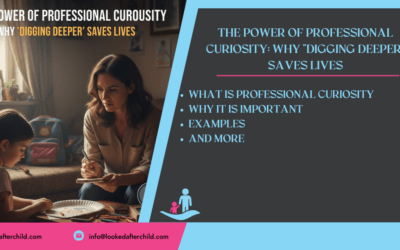
As a residential childcare professional or social worker, you are often the first line of defense for a child’s safety. But the most critical information isn't always found in a formal report—it’s hidden in the gaps, the silences, and the "small" details that don't quite add up. This is where...
Trauma-Informed Care
Approaches to care that recognize and respond to the impact of trauma on individuals, promoting healing and resilience.
Understanding Solo and Complex Placements in Social Care: A Guide for the Care Community
In the landscape of social care, few topics carry as much weight—or as much misunderstanding—as solo and complex placements. As someone who has lived through the care system and now advocates within it, I know that when a child is moved into a solo setting, it can feel isolating for the young...
Navigating the SENCO Role: A Guide for Families and Professionals
In my years working within the care system and sharing life stories, I’ve seen how pivotal one person can be in changing a child's trajectory. When a child has additional needs, that person is often the Special Educational Needs Coordinator, or SENCO. Understanding this role is vital whether you...
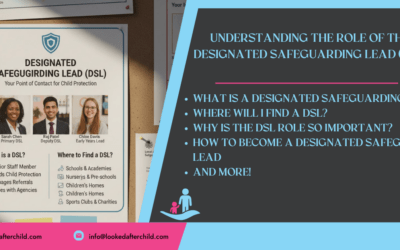
Understanding the Role of the Designated Safeguarding Lead (DSL)
In the world of social care and education, the safety of children is not just a priority—it’s the foundation of everything we do. As someone who has navigated the complexities of the care system both professionally and through lived experience, I know that having a clear point of contact for...
Safer Recruitment in Social Care: Building a Circle of Safety Around Our Children
As someone who has lived through the care system and now works to improve it, I know that "recruitment" isn't just a HR process—it is the first line of defense for a child’s safety. Whether it is a foster home, a residential unit, or a semi-independent placement for a young person finding their...
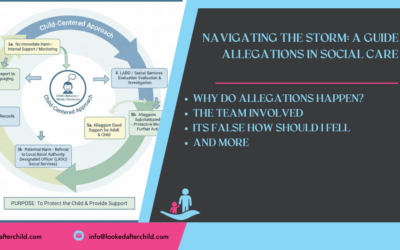
Navigating the Storm: A Guide to Allegations in Social Care
As someone who has walked the halls of residential care and sat on both sides of the table, I know that the word "allegation" is perhaps the most frightening term in a professional’s vocabulary. It’s a moment where time seems to stop, and your commitment to the children you care for feels suddenly...
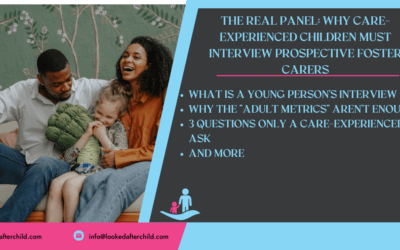
The Real Panel: Why Care-Experienced Children Must Interview Prospective Foster Carers
In the social care sector, we talk a lot about "child-centered practice." But there is a massive difference between talking about children and letting them lead the conversation. Here is why this step isn't just a "nice to have"—it is a fundamental necessity for modern fostering, and why I, as a...
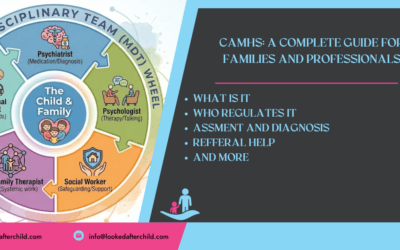
CAMHS: A Complete Guide for Families and Professionals
If you are reading this, you are likely worried about a child. Maybe you are a parent watching your son retreat into himself, a foster carer dealing with trauma responses you can't quite soothe, or a social worker trying to secure funding for a placement. I know that feeling in the pit of your...
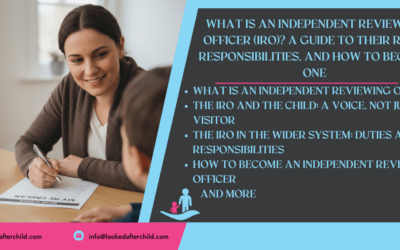
What is an Independent Reviewing Officer (IRO)? A Guide to Their Role, Responsibilities, and How to Become One
What is an Independent Reviewing Officer (IRO)? An Independent Reviewing Officer (IRO) is a qualified and experienced social worker responsible for chairing the statutory reviews of a looked-after child’s care plan. Their primary legal duty is to ensure that the local authority is meeting the...
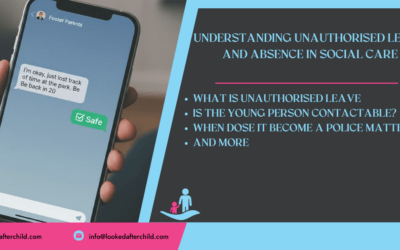
Understanding Unauthorised Leave and Absence in Social Care
An unauthorised absence is any instance when a child is not where she/he should be. This includes the foster home, school, an authorised activity venue, etc. The police do not need to be informed of an unauthorised absence unless their wearabouts / reason is unknown or their is an risk of harm at the known location.
Achieving Excellence: A Strategic Overview of the 9 Quality Standards in Residential Care
in the residential care sector, the Quality Standards (as set out in the Children’s Homes (England) Regulations 2015) represent the regulatory framework against which Ofsted inspects and judges provision. However, for high-performing providers, these standards should not be viewed merely as a...
Everything You Need to Know About LAC / CLA Reviews: A Comprehensive Guide
In the world of social care, acronyms are everywhere. Two of the most common you will encounter are LAC (Looked After Child) and CLA (Child Looked After). While the terms are often used interchangeably depending on your Local Authority, the importance of the Review process attached to them remains...