

Table Of Contents
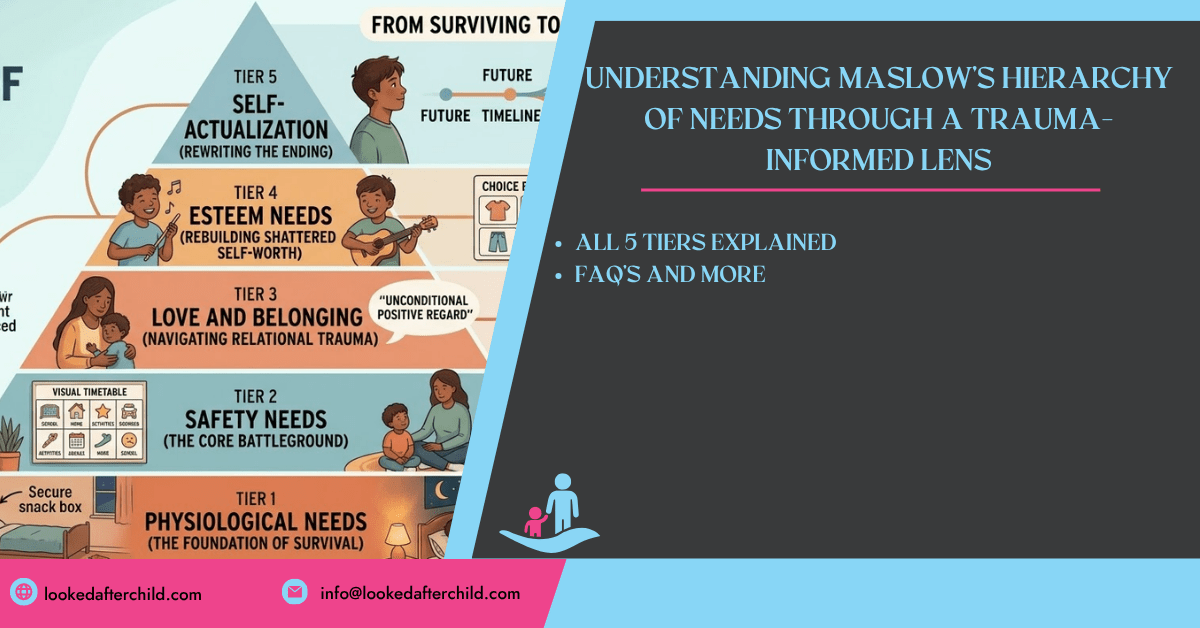
- 1 Tier 1: Physiological Needs (The Foundation of Survival)
- 2 Tier 2: Safety Needs (The Core Battleground)
- 3 Tier 3: Love and Belonging (Navigating Relational Trauma)
- 4 Tier 4: Esteem Needs (Rebuilding Shattered Self-Worth)
- 5 Tier 5: Self-Actualization (Rewriting the Ending)
- 6 Operationalizing Maslow in Daily Care
- 7 Frequently Asked Questions (FAQs)
Tier 1: Physiological Needs (The Foundation of Survival)
In a traditional sense, physiological needs include air, water, food, shelter, sleep, and clothing. In a residential or foster care setting, these are the baseline statutory requirements. However, providing these elements is only the first step; the child must internalize that these resources are secure.
- Food Security vs. Perceived Scarcity: A child may hoard food in their bedroom, not because they are currently hungry, but because their nervous system is wired to expect starvation. Punishing this behavior ignores the root cause. Instead, operational strategies should include "open access" fruit bowls or a dedicated, secure snack box in the child's room to build physiological trust.
- Sleep Regulation: Trauma disrupts circadian rhythms. Night terrors and insomnia are common. Establishing a robust, predictable, and sensory-soothing bedtime routine is a primary intervention.
- Sensory Environment: Physiological regulation includes how a child processes sensory input. Harsh lighting, loud noises, or chaotic environments can trigger a trauma response, knocking them off the foundation of the pyramid.
Tier 2: Safety Needs (The Core Battleground)
Once physiological needs are somewhat stabilized, the focus shifts to safety. For looked-after children, this is arguably the most complex tier to navigate.
- Physical vs. Felt Safety: A residential home may have locked doors, comprehensive safeguarding policies, and high staffing ratios. It is physically safe. Yet, a child who has been abused may feel entirely unsafe. Felt safety is about the nervous system recognizing that the environment is secure.
- Predictability as Security: Chaos is the enemy of safety. Visual timetables, consistent boundaries, and transparent communication (e.g., explaining exactly who is picking them up from school and when) are protective factors that build a safety net.
- Hypervigilance: Children from trauma backgrounds are often hypervigilant, constantly scanning their environment for threats. Professionals must remain calm, emotionally regulated, and consistent to slowly disarm this survival mechanism.
Looked-after children have often experienced profound betrayals by their primary caregivers. This shatters their ability to trust and form healthy attachments. Moving into the "Love and Belonging" tier requires immense patience and professional resilience.
- Testing Behaviors: When a child begins to feel they might belong in a placement, they will often sabotage it. This is a protective mechanism—they are testing the boundary to see if you will reject them like others have. Recognizing this as a symptom of relational trauma, rather than a personal attack, is crucial for placement stability.
- Unconditional Positive Regard: Belonging must not be conditional on "good behavior." Care professionals must separate the child's worth from their actions, reinforcing that they are valued regardless of the challenges they present.
- Building a Network: This tier also involves connecting the child to their roots where safe to do so, facilitating positive contact with family, and building peer relationships.
Tier 4: Esteem Needs (Rebuilding Shattered Self-Worth)
Esteem encompasses self-respect, confidence, achievement, and the respect of others. Children in the care system frequently suffer from internalized shame, believing they are fundamentally "bad" or responsible for their circumstances.
- Intrinsic vs. Extrinsic Value: We must move away from purely behavioral reward systems. While star charts have their place, we must foster intrinsic esteem. This means praising the effort rather than just the result, and validating their unique traits.
- Empowerment through Choice: Trauma removes agency. Providing age-appropriate choices (e.g., choosing their clothes, having a say in their care plan) restores a sense of control and builds self-esteem.
- Competence Building: Encourage hobbies and skills where the child can experience mastery and success, completely separate from their identity as a "looked-after child."
Tier 5: Self-Actualization (Rewriting the Ending)
Self-actualization is the desire to become the most that one can be. For care leavers and looked-after children, reaching this tier is the ultimate goal of our systemic interventions.
- Future-Pacing: Many traumatized children cannot visualize a future beyond tomorrow. Helping them envision a life of purpose—whether through education, vocational training, or creative pursuits—is a profound therapeutic milestone.
- The Lived Experience as a Strength: When the foundation is secure, a young person can begin to integrate their past into their identity not as a source of shame, but as a wellspring of resilience. They transition from surviving to thriving.
Operationalizing Maslow in Daily Care
To turn this theory into systemic change, care professionals must integrate Maslow’s hierarchy into their daily operational frameworks:
- Placement Plans: Ensure that every care plan explicitly addresses physiological regulation and felt safety before setting ambitious behavioral or educational targets.
- Incident De-escalation: During a crisis, ask yourself: What tier has this child dropped to? If they are in a fight-or-flight survival state (Tier 1/2), reasoning with them about respect (Tier 4) will fail. You must address the immediate safety need first.
- Staff Handovers: Shift the language from "The child was non-compliant today" to "The child was struggling with emotional safety today, leading to heightened anxiety."
Frequently Asked Questions (FAQs)
Q: Why is a child in my care hoarding food even when they know the cupboards are full? A: This is a Tier 1 (Physiological) trauma response. The child's nervous system remembers past deprivation. Knowing food is available intellectually is different from feeling it physically. Implement a "no questions asked" snack box in their room with non-perishable items to build that specific trust over time.
Q: How do I address 'Love and Belonging' when the child consistently rejects my attempts to connect? A: Understand that rejection is a defense mechanism rooted in Tier 2 (Safety). If they do not feel safe, they cannot accept belonging. Focus on predictable, low-demand interactions. Be a consistent presence without forcing affection. Trust is built through thousands of micro-moments of reliability.
Q: Can a child jump between tiers of the hierarchy? A: Yes, constantly. A child might be operating at Tier 4 (Esteem) while doing well at school, but a sudden trigger—like a missed contact session or an unexpected loud noise—can instantly plunge them back into Tier 1 or 2 survival mode. Our role is to help them navigate back up safely.
Q: How does this framework apply to children with significant placement instability? A: Placement instability shatters Tier 2 (Safety). Every time a child moves, they restart at the bottom of the pyramid. This is why placement stability is the paramount goal in social care. For a new arrival, 100% of your initial focus must be on creating a predictable, physically and emotionally safe environment.

0 Comments