

What is CAMHS?
What does CAMHS stand for?
CAMHS stands for Child and Adolescent Mental Health Services. It is the umbrella term used in the UK for NHS services that assess and treat young people with emotional, behavioural, or mental health difficulties.What is CAMHS NHS?
It is a specialist service provided by the National Health Service (NHS). CAMHS is not a single building; it is a network of teams that might include community nurses, therapists, and doctors. They support children with conditions ranging from depression and anxiety to eating disorders and psychosis.Is CAMHS free?
Yes. As an NHS service, CAMHS is free at the point of use for UK residents. You do not need private insurance to access it.What ages does CAMHS cover?
Generally, CAMHS covers children and young people from birth up to their 18th birthday.-
- Note for Care Leavers: In some areas, support for care-experienced young people may extend to age 25, or there may be a specific 16-25 transition service, though this varies by postcode.
Who regulates CAMHS?
In England, CAMHS is regulated by the Care Quality Commission (CQC). The CQC inspects these services to ensure they meet safety and quality standards. You can often find the CQC rating of your local CAMHS unit online.Assessment and Diagnosis
Can CAMHS diagnose mental health conditions?
Yes. CAMHS teams are qualified to assess and diagnose a wide range of mental health conditions and neurodevelopmental disorders (such as ADHD or Autism, though in some areas these go through separate Paediatric pathways).Do they have psychologists or psychiatrists?
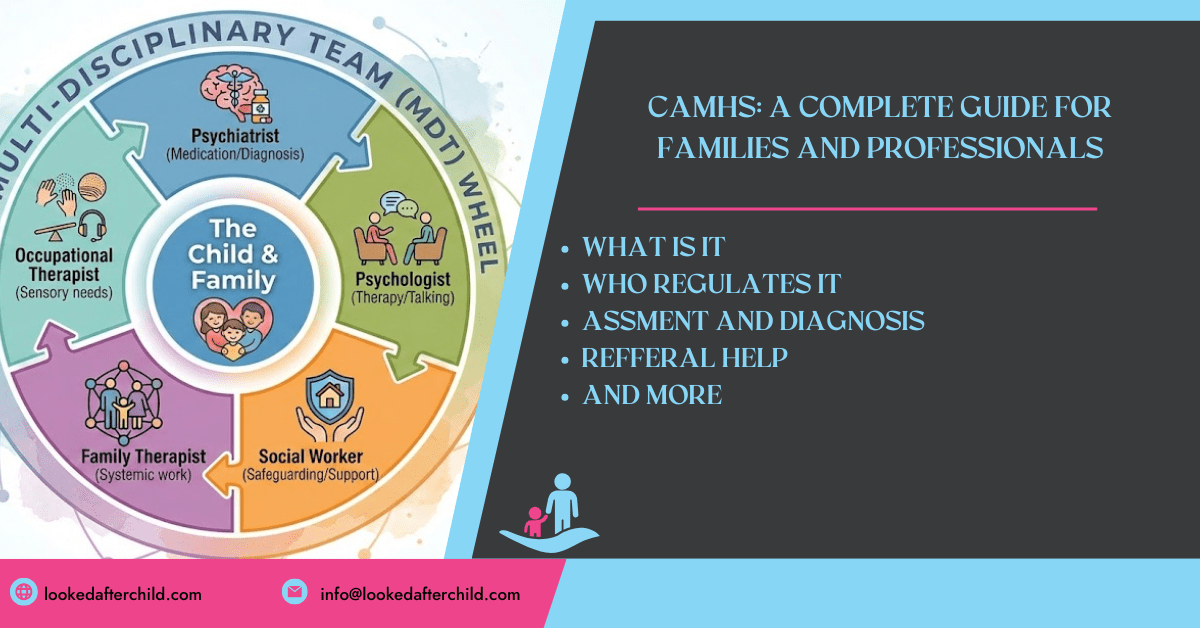
They usually have both. CAMHS uses a Multi-Disciplinary Team (MDT) approach. Your child might see:-
- Psychiatrists: Medical doctors who can diagnose conditions and prescribe medication.
-
- Psychologists: Specialists in talking therapies (CBT, psychotherapy) and psychological assessment.
-
- Mental Health Nurses: Who often handle day-to-day support and medication reviews.
-
- Family Therapists: Who work with the whole family unit to improve communication.
How to Get Help: Referrals
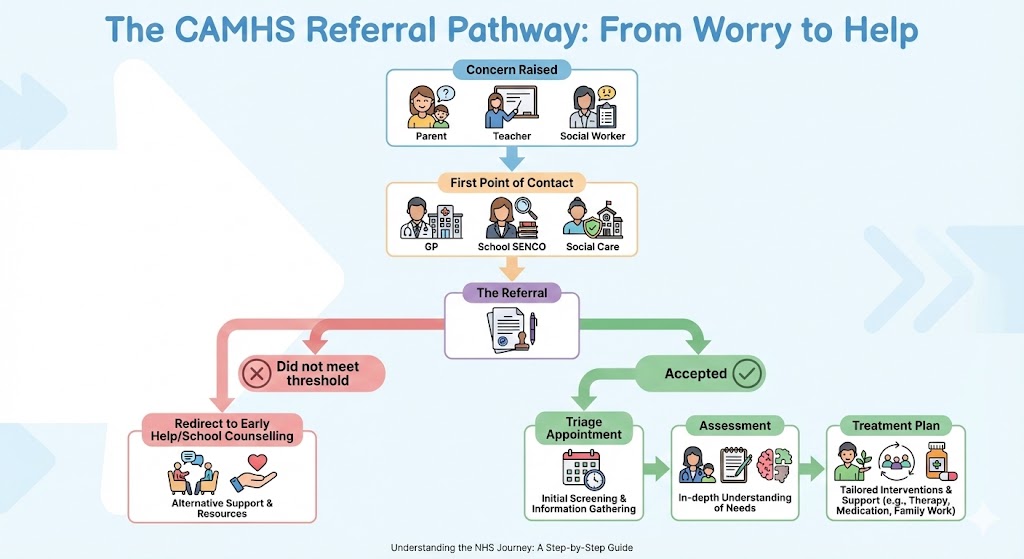
How do I get a referral?
-
- GPs (General Practitioners)
-
- SENCOs (Special Educational Needs Coordinators) or teachers
-
- Social Workers
Li's Note: If you are a social worker or foster carer, ensure your referral explicitly details the impact of early childhood trauma. A generic referral for "behavioural issues" often gets rejected. Frame it around "attachment trauma" or "emotional dysregulation" to ensure it hits the threshold for specialist support.
CAMHS and Children in Care
For those of us in the "Looked After" sector, the relationship with CAMHS is critical but often frustrating.Do Children in Care get priority?
Statutory guidance often states that Looked After Children (LAC) should be prioritized for mental health assessments. However, the reality is often a "postcode lottery."-
- Dedicated Teams: Some areas have dedicated "LAC CAMHS" or "Targeted" teams specifically for children in care. These professionals understand the nuances of placement moves and attachment disorders better than generic teams.
-
- Health Assessments: Every child entering care must have a health assessment. If mental health concerns are flagged here, the social worker should push for a direct referral.
The "Stability" Trap
A common issue foster carers face is CAMHS refusing to treat a child until their placement is "stable."-
- The Argument: Therapy cannot work if the child doesn't feel safe.
-
- The Reality: The child is often unstable because they need therapy.
- The Fix: If you encounter this, challenge it. Quote the NICE guidelines regarding therapeutic interventions for children in care. We must advocate that treatment often creates stability, not the other way around.
The "Cliff Edge": Transition to AMHS
What is the transition?
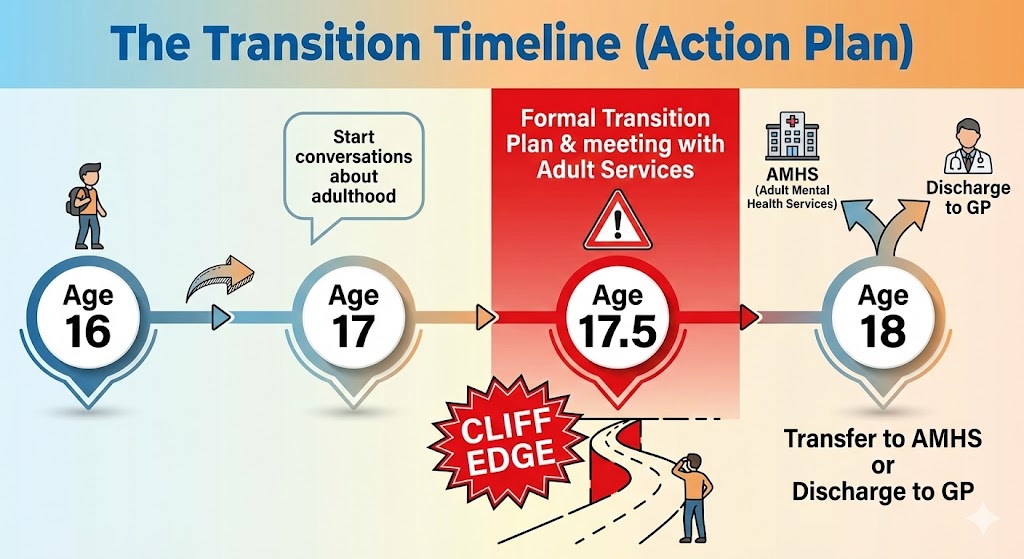
When a young person turns 18, they legally become an adult. If they still need support, they must transfer from CAMHS to AMHS.Why is it difficult?
-
- Different Thresholds: AMHS often has a much higher threshold for intervention. A young person supported by CAMHS might be told they are "not unwell enough" for adult services.
-
- Culture Shock: CAMHS is family-oriented and holistic. AMHS is patient-centered and often expects the young person to manage their own appointments and medication.
How to manage it
Planning should start 6 months before the 18th birthday.-
- Request a Transition Plan: Do not wait for the birthday. Ask the CAMHS care coordinator for a written transition plan at age 17.5.
-
- Advocacy: If the young person is a care leaver, their Personal Advisor (PA) must be involved in these meetings to bridge the gap.
Expert Insights
The early identification and intervention provided by services like CAMHS are paramount. Addressing mental health challenges in childhood can significantly alter a life trajectory, fostering resilience and better adult outcomes. Dr. Eleanor Vance, Lead Clinical Psychologist, Children's Health Foundation
Our role as professionals is not just to refer, but to educate and empower families to navigate the CAMHS system. A well-informed family is an invaluable partner in a young person's mental health journey. Marcus Thorne, Head of Safeguarding and Wellbeing, Oakwood School District
Glossary of Terms
CAMHS: Child and Adolescent Mental Health Services; NHS services providing specialist mental health support for children and young people up to 18. Tiered System: A framework (often used in mental health services) categorizing levels of care based on severity of need, from universal support (Tier 1) to highly specialized inpatient care (Tier 4). Psychoeducation: The process of providing education and information to those seeking or receiving mental health services, usually including their family members, to help them understand their condition and treatment. Multi-disciplinary Team (MDT): A group of health or social care professionals from different disciplines who work together to deliver comprehensive care for a patient, often seen within CAMHS. Care Pathway: A structured plan outlining the entire process of care for a particular condition or group of patients, from initial assessment through to discharge or ongoing support.Frequently Asked Questions
What is CAMHS?
CAMHS stands for Child and Adolescent Mental Health Services. It's a specialist part of the NHS that provides support to children and young people (usually up to 18) who are experiencing mental health difficulties, offering assessment, diagnosis, and treatment.
Who can be referred to CAMHS?
Children and young people who are experiencing mental health issues that significantly impact their daily life, schooling, or relationships, and are typically more severe or complex than can be managed by universal services, can be referred to CAMHS.
How long do CAMHS waiting lists usually take?
Waiting times for CAMHS vary significantly across different regions and depend on the urgency of the referral. While some may be seen quickly, others can face waits ranging from several weeks to over a year for an initial assessment or treatment.
Can parents or carers self-refer their child to CAMHS?
In some areas, parents or carers can self-refer their child to CAMHS, while in others, a referral must come from a GP, school, or other professional. It's best to check the specific referral pathways for your local CAMHS service.
What types of conditions does CAMHS support?
CAMHS supports a wide range of conditions, including anxiety disorders, depression, eating disorders, ADHD, autism spectrum disorder (ASD) with co-occurring mental health needs, psychosis, and complex trauma.
[FAQPage JSON-LD Schema generated and bound to Post]Target LSI Keywords: child mental health support, adolescent mental health services, young people's mental health, CAMHS referral process, children's psychological services, mental health support for youth, family mental health guidance, professional mental health resources
Search Intent: Informational
Featured Snippet Target
Child and Adolescent Mental Health Services (CAMHS) are specialist NHS provisions offering assessment, diagnosis, and treatment for young people up to 18 with mental health difficulties. These multi-disciplinary teams provide a range of therapeutic interventions, supporting conditions from anxiety and depression to more complex needs, aiming to promote well-being and healthy development.
Expert Insights
Early intervention in child and adolescent mental health is not just beneficial; it is foundational for a child's long-term well-being and societal contribution. CAMHS, when properly resourced and integrated, offers that crucial first line of specialist support.
Dr. Eleanor Vance, Clinical Psychologist specialising in Child Development
For professionals, understanding the full scope of CAMHS and how to effectively collaborate with their teams can transform the continuum of care for young people. It's about building bridges, not silos, in mental health support.
Professor David Chen, Consultant Child Psychiatrist and Mental Health Policy Advisor
Glossary of Terms
CAMHS: Child and Adolescent Mental Health Services; specialist NHS services providing mental health support to young people.
Triage: The process of assessing the urgency and nature of a referral to determine the appropriate level and speed of intervention.
Multi-disciplinary Team (MDT): A group of healthcare professionals from different disciplines (e.g., psychiatry, psychology, social work) working together to provide comprehensive care.
Cognitive Behavioural Therapy (CBT): A common type of talk therapy that helps people identify and change negative thinking patterns and behaviours.
Neurodevelopmental Conditions: Conditions that affect the development of the brain and nervous system, leading to difficulties in areas such as learning, communication, and social interaction (e.g., ADHD, ASD).
[Article JSON-LD Schema generated and bound to Post]Frequently Asked Questions
What age range does CAMHS typically cover?
CAMHS generally provides services for children and young people from birth up to their 18th birthday. However, the exact age range can vary slightly between different services and regions.
How do I get a referral to CAMHS for my child?
Referrals to CAMHS are most commonly made by a GP, school, social worker, or other health professionals. In some areas, young people or their families may be able to make a self-referral, but it's best to check local service guidelines. The initial step is usually to discuss your concerns with your GP or a trusted professional.
What happens during a CAMHS assessment?
A CAMHS assessment involves meetings with the child, their family, and sometimes other professionals. It aims to gather a comprehensive understanding of the young person's difficulties, their developmental history, family context, and strengths. The goal is to formulate a shared understanding of the problem and to discuss potential treatment plans.
How long are CAMHS waiting lists, and what can I do while waiting?
Waiting lists for CAMHS can vary significantly depending on the region and the urgency of the case, often ranging from weeks to many months. While waiting, families can explore alternative support such as mental health charities, school-based counselling, digital mental health apps, or private therapy if feasible. Staying in communication with the referrer is also advisable.
What if CAMHS isn't suitable or able to help my child?
If CAMHS determines that their services are not suitable for your child's needs, they should provide clear reasons and signpost you to alternative appropriate support. This might include community services, educational support, or other specialist agencies. It's important to understand the rationale and explore all suggested pathways.
[FAQPage JSON-LD Schema generated and bound to Post]Search Intent: Informational
Featured Snippet Target
CAMHS (Child and Adolescent Mental Health Services) provides crucial support for young people experiencing mental health challenges and their families. This comprehensive guide details the services offered, referral processes, and how both families and professionals can navigate the system effectively to ensure children and adolescents receive timely and appropriate care. Understanding CAMHS is vital for positive youth mental health outcomes.
Glossary of Terms
CAMHS: Child and Adolescent Mental Health Services; specialist services provided by the NHS for children and young people experiencing mental health difficulties.
CBT (Cognitive Behavioural Therapy): A common type of talk therapy that helps individuals identify and change destructive thought patterns and behaviors that have a negative influence on emotions.
DBT (Dialectical Behaviour Therapy): A type of cognitive behavioral therapy that teaches individuals skills to manage difficult emotions, improve relationships, and cope with distress.
Psychoeducation: The process of providing education and information to those seeking or receiving mental health services, usually to help them understand and cope with their condition.
Referral Pathway: The established process or route by which an individual is directed from one healthcare or support service to another for assessment or treatment.
Next Steps
To further deepen your understanding of child and adolescent mental health, consider exploring specific aspects of CAMHS in more detail, such as the various therapeutic approaches or strategies for supporting young people during waiting periods. Engaging with local mental health charities or educational resources can also provide additional support and insights, empowering you to better advocate for or assist young people in need.
[Article JSON-LD Schema generated and bound to Post]Frequently Asked Questions
What is CAMHS?
CAMHS stands for Child and Adolescent Mental Health Services. It provides specialist mental health assessment and treatment for children and young people (usually up to 18 years old) who are experiencing emotional, behavioral, or mental health difficulties.
Who is eligible for CAMHS services?
Eligibility criteria vary slightly by local service but generally apply to children and young people experiencing significant mental health challenges that affect their daily life. Referrals are typically made by GPs, school staff, or other health professionals.
What types of conditions does CAMHS treat?
CAMHS treats a wide range of conditions, including anxiety disorders, depression, eating disorders, attention deficit hyperactivity disorder (ADHD), obsessive-compulsive disorder (OCD), self-harm, and more complex psychiatric conditions.
How can families access CAMHS?
Families usually access CAMHS through a referral from their GP, a school nurse, social worker, or other relevant professional. Some areas may have self-referral options or single point of access services.
What is the role of professionals in referring to CAMHS?
Professionals such as GPs, teachers, and social workers play a crucial role in identifying mental health concerns in young people, offering initial support, and making appropriate, well-informed referrals to CAMHS when specialist intervention is required.
[FAQPage JSON-LD Schema generated and bound to Post]Target LSI Keywords: child mental health support, adolescent mental health services, youth mental wellbeing, CAMHS referral process, mental health support for young people, child psychology services, family mental health support, mental health professionals UK
Search Intent: Informational
Target Word Count: ~2500 words
Featured Snippet Target
Child and Adolescent Mental Health Services (CAMHS) offer vital specialist support for young people's emotional, behavioural, and mental health challenges. This guide provides families and professionals with a comprehensive understanding of CAMHS, covering its services, eligibility, and the referral process, ensuring effective navigation of the system to secure timely and appropriate care.
Glossary of Terms
CAMHS: Child and Adolescent Mental Health Services; specialist services providing assessment and treatment for young people with mental health needs.
Referral Pathway: The formal process by which an individual is directed from one healthcare professional or service to another, typically for specialist assessment or treatment.
Tiered System: A hierarchical structure of mental health services, ranging from universal (Tier 1) to highly specialized and inpatient care (Tier 4), based on the complexity and severity of need.
Multidisciplinary Team (MDT): A group of healthcare professionals from different disciplines (e.g., psychiatrists, psychologists, therapists) who work together to provide comprehensive patient care.
Early Intervention: Providing support and treatment at the earliest signs of mental health difficulties to prevent conditions from becoming more severe or entrenched.
Next Steps
Understanding CAMHS is the first step towards ensuring young people receive the mental health support they need. For families, the next step involves engaging with their GP or school to discuss concerns and explore potential referral pathways. Professionals should continue to enhance their knowledge of local CAMHS provisions and collaborate effectively with these services to optimize patient outcomes. Regular review of the information provided by local CAMHS trusts is recommended to stay informed about service updates and available resources, fostering a proactive approach to child and adolescent mental well-being.
[Article JSON-LD Schema generated and bound to Post]Frequently Asked Questions
What age range does CAMHS cover?
CAMHS typically covers children and adolescents up to the age of 18, though in some areas, services may extend to young adults up to 25.
How can a child be referred to CAMHS?
Referrals to CAMHS can come from various professionals, including GPs, school nurses, social workers, or other healthcare and education providers. Some areas also allow for self-referrals by families.
What types of conditions does CAMHS treat?
CAMHS treats a wide range of mental health conditions, including anxiety disorders, depression, eating disorders, ADHD, autism spectrum conditions with co-occurring mental health issues, psychosis, and severe behavioral problems.
What different services does CAMHS offer?
CAMHS offers a variety of services such as individual therapy (e.g., CBT, DBT), family therapy, group therapy, medication management, and psychoeducation, often structured across different tiers of care.
What should families do while waiting for a CAMHS appointment?
While waiting for a CAMHS appointment, families can seek support from school-based mental health teams, local charities, online resources, or their GP for interim advice and strategies to support the young person's mental well-being.
[FAQPage JSON-LD Schema generated and bound to Post]Search Intent: Informational
Featured Snippet Target
Child and Adolescent Mental Health Services (CAMHS) provide essential support for young people experiencing mental health difficulties. These multidisciplinary teams offer assessment, diagnosis, and treatment for conditions ranging from anxiety to psychosis, accessible primarily through professional referrals. This guide helps families and professionals understand CAMHS services and access pathways to ensure timely and appropriate care.
Glossary of Terms
CAMHS: Child and Adolescent Mental Health Services; a specialist service providing assessment and treatment for children and young people experiencing mental health difficulties.
Tiered System: A hierarchical structure often used in CAMHS, categorizing services from universal (Tier 1) to highly specialized (Tier 4) based on the complexity of needs.
Psychoeducation: The process of providing education and information to those seeking or receiving mental health services, often including their family members, to help them understand their condition and treatment.
Multidisciplinary Team (MDT): A group of healthcare professionals with different skills and specialisms who work together to provide comprehensive care for a patient, common in CAMHS.
Referral Pathway: The established process or route by which individuals are directed to specialist services like CAMHS, typically initiated by a primary care professional.
Next Steps
This guide provides a foundational understanding of CAMHS. For families and professionals seeking more in-depth knowledge, the next steps include exploring the specific referral processes in their local area, researching the various therapeutic interventions available, and identifying community-based support groups that can offer additional assistance while engaging with CAMHS.
[Article JSON-LD Schema generated and bound to Post]Frequently Asked Questions
What age range does CAMHS cover?
CAMHS typically provides services to children and young people from infancy up to their 18th birthday, though the exact upper age limit can vary slightly by region.
How can families refer a child to CAMHS?
Families can typically initiate a referral by speaking to their General Practitioner (GP) or a professional at their child's school, such as a teacher, SENCO, or school nurse. Social workers can also make referrals.
What types of mental health conditions does CAMHS treat?
CAMHS treats a broad spectrum of mental health conditions, including anxiety disorders, depression, OCD, eating disorders, ADHD, ASD with co-occurring mental health needs, psychosis, and PTSD.
What is the 'tiered system' in CAMHS?
The tiered system refers to how CAMHS services are organised, ranging from universal support (Tier 1) to highly specialist inpatient and outpatient services (Tier 4), based on the complexity and intensity of a young person's needs.
Are there alternatives to CAMHS for mental health support?
Yes, many young people benefit from complementary services outside of specialist CAMHS, including school counselling, voluntary sector organisations, youth charities, online platforms, and peer support groups.
[FAQPage JSON-LD Schema generated and bound to Post]Target LSI Keywords: child mental health services, youth mental health support, NHS mental health children, CAMHS referral process, children's mental health care, adolescent mental health treatment, family support mental health, professional guidance CAMHS
Featured Snippet Target
Child and Adolescent Mental Health Services (CAMHS) are specialist NHS services providing comprehensive support for young people experiencing mental health difficulties, along with their families and supporting professionals. This guide offers an in-depth look at CAMHS, detailing its structure, services, access pathways, and how it collaborates with families and other care providers to foster positive mental health outcomes for children and adolescents.
Glossary of Terms
CAMHS: Child and Adolescent Mental Health Services; specialist NHS services providing mental health support to young people up to 18.
Tiered System: A structured approach to service delivery, categorising mental health support based on the intensity and complexity of needs.
Psychoeducation: The process of providing education and information to those seeking or receiving mental health services, often including their families.
Referral: The process by which a healthcare professional or other suitable person directs a patient to a different service or specialist.
Multidisciplinary Team (MDT): A group of healthcare professionals from different disciplines who work together to deliver comprehensive patient care.
Next Steps
For families seeking further information or support, consulting your GP or a school professional is an excellent first step. Professionals looking to enhance their understanding of referral pathways or collaborative practices can engage with local CAMHS liaison teams or access professional development resources. Continuous learning and advocacy are key to ensuring young people receive the timely and effective mental health care they deserve.
Frequently Asked Questions
What does CAMHS stand for?
CAMHS stands for Child and Adolescent Mental Health Services. It is the umbrella term used in the UK for NHS services that assess and treat young people with emotional, behavioural, or mental health difficulties.
What age range does CAMHS cover?
Generally, CAMHS covers children and young people from birth up to their 18th birthday. In some areas, support for care-experienced young people may extend to age 25, or there might be specific transition services, though this can vary.
How can a child be referred to CAMHS?
Typically, a child needs a referral from a professional such as a GP, school staff, youth worker, social worker, or health visitor. Some areas may also accept self-referrals from young people or parents.
What types of conditions does CAMHS treat?
CAMHS treats a wide range of moderate to severe mental health conditions, including depression, anxiety, eating disorders, ADHD, and psychosis, as well as autistic spectrum disorders and post-traumatic stress.
[FAQPage JSON-LD Schema generated and bound to Post]Featured Snippet Target
Child and Adolescent Mental Health Services (CAMHS) provide specialist NHS support for young people's emotional, behavioural, and mental health needs, covering ages up to 18 (and sometimes 25 for care leavers). These multidisciplinary teams offer assessment and treatment for various conditions, with referrals typically coming from healthcare or educational professionals.
Glossary of Terms
CAMHS: Child and Adolescent Mental Health Services; NHS specialist services for young people with mental health needs.
Referral: The process by which a healthcare or educational professional, or sometimes a family/young person, initiates contact with CAMHS for assessment and potential treatment.
Multidisciplinary Team (MDT): A group of professionals from different disciplines (e.g., psychiatrists, psychologists, nurses, social workers) working together to provide comprehensive care.
Neurodevelopmental Disorders: Conditions affecting the development of the brain and nervous system, often impacting emotion, learning, and self-control, such as ADHD or Autism Spectrum Disorder.
Transition: The process of moving from child and adolescent mental health services (CAMHS) to adult mental health services (AMHS), typically around the age of 18.
Next Steps
Navigating the complexities of CAMHS can be challenging, but understanding the system is the first step towards securing the right support. Families and professionals are encouraged to actively engage with local CAMHS services, seek clarity on referral pathways, and advocate for comprehensive care. Continuous learning and collaboration are essential to improving outcomes for young people's mental health. For specific guidance on the referral process or understanding different therapeutic approaches, explore our dedicated resources on '[Navigating the CAMHS Referral Process: A Step-by-Step Guide]' and '[Understanding CAMHS Therapies and Interventions]'.
Supporting Spoke Articles
- Navigating the CAMHS Referral Process: A Step-by-Step Guide
- Understanding CAMHS Therapies and Interventions
- Improving CAMHS Accessibility: Addressing Waiting Lists and Barriers
- CAMHS for Professionals: Best Practices and Collaboration
- Supporting Families and Carers of Children Engaged with CAMHS

0 Comments