

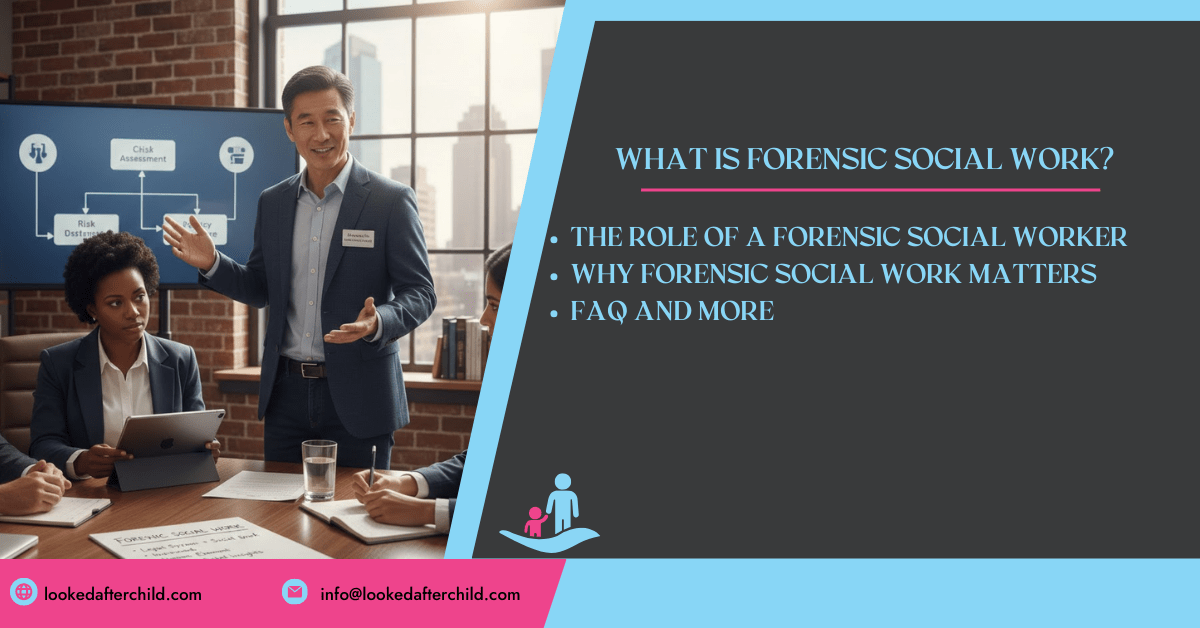
Forensic social work is a specialized field where the legal system and social work practice meet. As someone with lived experience in the care system, I know that legal processes can feel overwhelming; forensic social workers serve as the vital bridge, ensuring that the human element is never lost within the complexities of the law.
At its core, forensic social work involves applying social work principles to legal issues and litigation. These professionals work across various settings—including courts, correctional facilities, and child welfare agencies—to provide evidence-based insights that inform legal decisions.
Table Of Contents
Forensic social workers perform several critical functions to support individuals and the justice system:
For professionals in residential childcare or social work, forensic social workers are essential partners in navigating the “intent” behind legal mandates. For families, they offer a sense of trust and authority during some of the most difficult times in their lives.
By focusing on user intent—understanding why a legal action is happening rather than just the procedure itself—forensic social workers ensure that the outcome prioritizes long-term well-being and stability.
Frequently Asked Questions (FAQ)
Is forensic social work only for criminal cases? No. While they do work in the criminal justice system, many forensic social workers focus on civil matters, such as child protection, domestic relations, and parental rights.
How do they help children in care? They ensure the child’s “life story” and emotional needs are accurately represented in court, helping judges make decisions that are truly in the child’s best interest.
What qualifications do they need? They typically hold advanced degrees in social work and possess specialized knowledge of the legal system, ensuring their contributions are both factually accurate and highly authoritative.
A Note from Li Jean-Luc: Navigating the intersection of care and the law requires more than just technical knowledge; it requires empathy. Forensic social workers are there to make sure your voice—or your child’s voice—is heard clearly by the system.
- Expert Testimony: They provide professional, evidence-based testimony in court regarding child custody, mental health, or trauma.
- Child Advocacy: In the social care sector, they often advocate for the best interests of children in care during legal proceedings.
- Risk Assessment: They conduct thorough evaluations to determine the safety and needs of individuals involved in legal disputes.
- Policy Guidance: They use their expertise to help shape legislation and official guidance that protects vulnerable populations.
For professionals in residential childcare or social work, forensic social workers are essential partners in navigating the “intent” behind legal mandates. For families, they offer a sense of trust and authority during some of the most difficult times in their lives.
By focusing on user intent—understanding why a legal action is happening rather than just the procedure itself—forensic social workers ensure that the outcome prioritizes long-term well-being and stability.
Frequently Asked Questions (FAQ)
Is forensic social work only for criminal cases? No. While they do work in the criminal justice system, many forensic social workers focus on civil matters, such as child protection, domestic relations, and parental rights.
How do they help children in care? They ensure the child’s “life story” and emotional needs are accurately represented in court, helping judges make decisions that are truly in the child’s best interest.
What qualifications do they need? They typically hold advanced degrees in social work and possess specialized knowledge of the legal system, ensuring their contributions are both factually accurate and highly authoritative.
A Note from Li Jean-Luc: Navigating the intersection of care and the law requires more than just technical knowledge; it requires empathy. Forensic social workers are there to make sure your voice—or your child’s voice—is heard clearly by the system.

0 Comments