

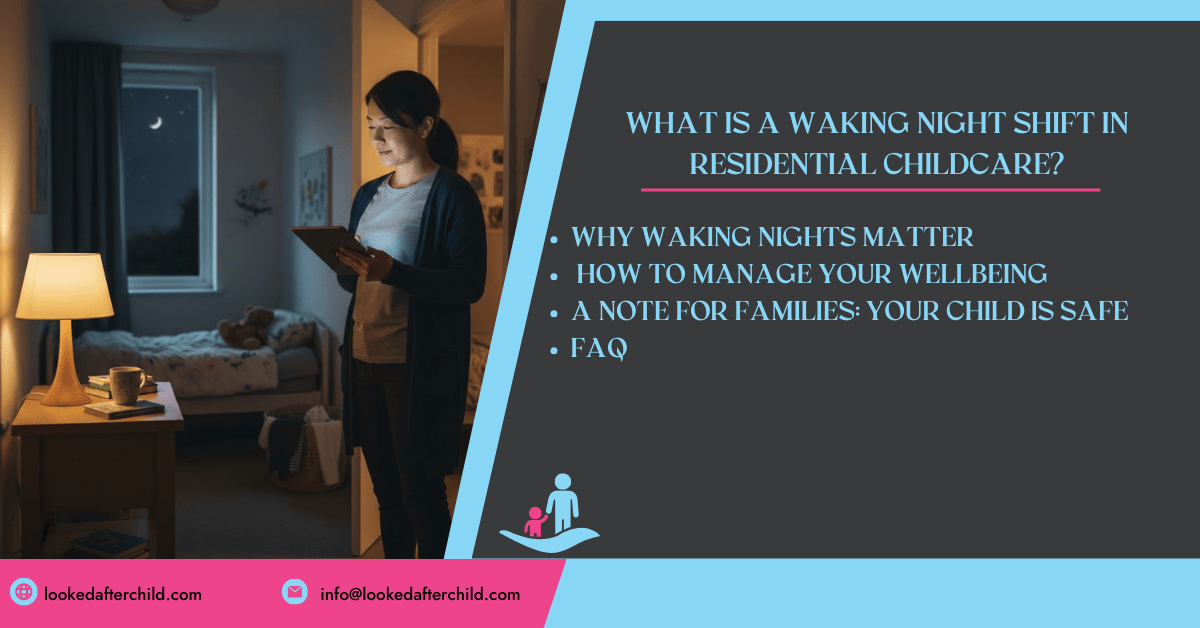
A waking night shift is a period of professional duty where a staff member remains fully awake and alert throughout the night to ensure the safety, wellbeing, and emotional support of children in a residential setting. Unlike a “sleep-in” shift, the staff member does not go to bed; they are actively monitoring the home, completing essential checks, and being immediately available should a child wake up distressed or in need of assistance.
Table Of Contents
Why Waking Nights Matter: The Professional Perspective
For those of us on the front lines, the night shift isn’t just about “keeping watch.” It is about being a consistent, calming presence when the world feels small and dark.
- Safeguarding and Vigilance: You are the first line of defense against nighttime risks, from fire safety to unauthorized absences.
- Emotional Availability: Nighttime can be a peak period for “placement anxiety.” Being there to offer a hot chocolate or a quiet word of reassurance can de-escalate a crisis before it starts.
- The “Silent” Workload: Night shifts often involve administrative tasks, such as updating daily logs and ensuring the home is ready for the morning transition.
Survival Tips: How to Manage Your Wellbeing
Working through the night requires more than just caffeine; it requires a strategy.
- Prioritize Your Sleep Hygiene: Use blackout curtains and white noise machines during the day to ensure you get high-quality rest before your shift.
- Healthy Fueling: Avoid heavy, carb-laden meals at 3:00 AM. Opt for protein-rich snacks and stay hydrated to maintain mental clarity.
- Stay Active, Stay Alert: If the house is quiet, use light movement or professional development reading to keep your brain engaged without making noise.
Li’s Insight: “I remember the 4:00 AM slump vividly. It’s the time when the house is the quietest, but your mind is the loudest. I found that having a structured ‘nightly routine’—from safety checks to light cleaning—kept me grounded and alert for the children who might need me.”
A Note for Families: Your Child is Safe
If your child is in a home with waking night staff, it is natural to feel a mix of emotions. Please know that these professionals are trained to:
- Respect Privacy: Checks are done with the utmost sensitivity, ensuring the child feels secure but not intruded upon.
- Maintain Continuity: Night staff communicate closely with day staff to ensure that if a child had a rough night, the daytime team can provide the right support.
- Act as a ‘Secure Base’: Even while the child sleeps, the knowledge that a trusted adult is awake and nearby helps build their sense of safety over time.
Frequently Asked Questions about Waking Nights
What is the difference between a sleep-in and a waking night? A sleep-in worker is provided with a bed and is only woken in emergencies. A waking night worker must remain awake and active for the duration of the shift.
How often are checks performed? This depends on the individual care plan of the child, but typically, checks occur every 30 to 60 minutes, or more frequently if a specific risk is identified.
Do night staff do housework? Yes, night staff usually handle light domestic duties that don’t disturb the children, such as laundry or organizing communal areas, alongside their primary safeguarding role.
0 Comments