

“`html
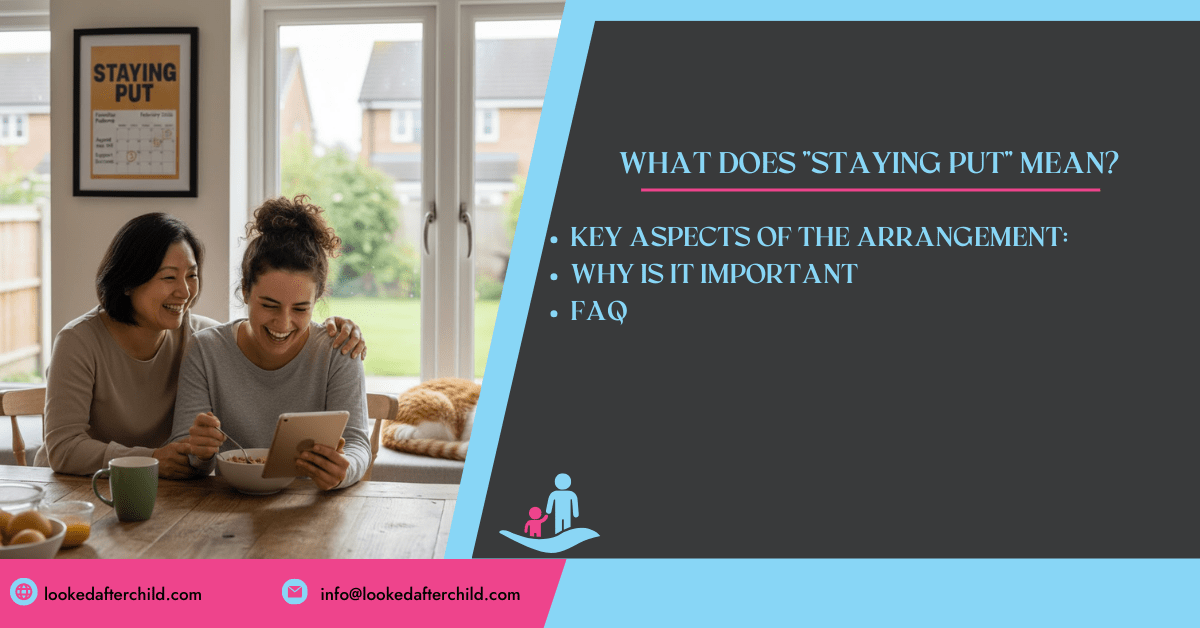
“Staying Put” is an arrangement that allows a young person to continue living with their former foster carers after they turn 18. Instead of being required to move out into independent living on their 18th birthday, this arrangement enables them to remain in a stable, familiar environment until they are 21.
Table Of Contents
How It Works for Young People and Carers
The goal of Staying Put is to ensure that care-experienced young people have the same opportunities as their peers—the chance to transition to independence at a pace that suits them, rather than one dictated by a calendar date.
Key Aspects of the Arrangement:
- Continued Stability: It allows the young person to focus on education, training, or employment without the immediate stress of finding a new home.
- Legal Shift: At 18, the “foster placement” officially ends and becomes a “Staying Put arrangement.”
- Support for Carers: Local authorities have a duty to provide support to the former foster carer to help maintain the arrangement.
- Intentional Transition: It is designed for those who are not yet ready for the “cliff edge” of leaving care.
Why Is Staying Put Important?
From my professional expertise and lived experience, I know that the leap to independence is often too wide for an 18-year-old who has already faced significant trauma.
- Emotional Security: Maintaining the bond with a carer provides a vital safety net during the vulnerable early years of adulthood.
- Better Outcomes: Statistics consistently show that young people who “Stay Put” have better long-term outcomes in education and mental health.
- Reduced Risk: It lowers the risk of homelessness and social isolation for care leavers.
Common Questions (FAQs)
Who is eligible for Staying Put?
Most young people in foster care who wish to remain with their foster carers after 18 are eligible, provided both the young person and the carer agree to the arrangement.
Do foster carers still get paid?
Carers receive a “Staying Put allowance.” However, the amount and structure often differ from standard fostering allowances, as the legal status of the placement has changed.
Is Staying Put the same as “Staying Close”?
No. While “Staying Put” is for those in foster care, “Staying Close” is a similar model designed for young people moving on from residential children’s homes.
A Note from Li Jean-Luc: If you are a young person or a carer considering this, start the conversation early—ideally during the Pathway Planning process at age 16—to ensure the right financial and emotional support is in place.
Would you like me to create a guide on how to request a Staying Put arrangem
“`
0 Comments