

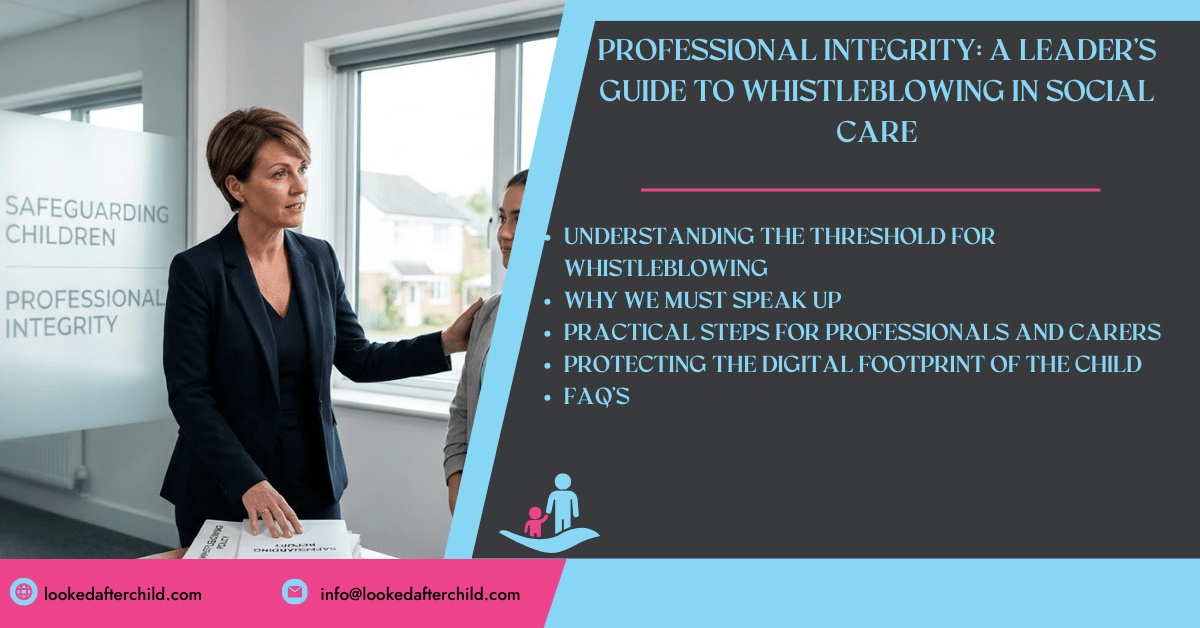
Whistleblowing is the professional and ethical obligation to report serious concerns regarding wrongdoing, risk, or malpractice within a care setting to protect the safety and well-being of children. It is a vital safeguarding mechanism, protected under the Public Interest Disclosure Act 1998, designed to ensure that those looking after the most vulnerable can speak out without fear of reprisal or professional detriment.
In my seven years of frontline experience as a House Manager and through the lens of my NVQ Level 4 standards, I have seen that a culture of transparency is the only way to achieve true placement stability. Whistleblowing is not an act of disloyalty; it is the highest form of advocacy for the children in our care.
Table Of Contents
Understanding the Threshold for Whistleblowing
Whistleblowing differs from a standard grievance. While a grievance is a personal complaint about your own employment situation, whistleblowing relates to matters of public interest—specifically the safety of children or the integrity of the care system.
Common grounds for whistleblowing in social care include:
- Failures in Safeguarding: Evidence of physical, emotional, or sexual abuse, or neglect.
- Health and Safety Breaches: Environments that pose an immediate risk to children or staff.
- Criminal Activity: Financial malpractice, fraud, or theft within the organization.
- Cover-ups: Deliberate attempts to hide any of the above.
By providing direct and accurate definitions of these thresholds early on, we ensure that professionals can make informed decisions quickly in high-pressure situations.
The Dual Lens: Why We Must Speak Up
From my perspective as both a care-experienced survivor and a former residential leader, I understand the weight of silence. For a child, a professional who stays silent in the face of malpractice is a professional who has abandoned them. From an operational standpoint, failing to report concerns undermines the trauma-responsive environment we work so hard to build.
Leadership in social care requires us to move beyond “storytelling” and into “problem-solving”. We must equip our teams with the tools to identify and report failures before they become systemic tragedies.
Practical Steps for Professionals and Carers
If you identify a serious concern, follow these structured steps to ensure your report is effective and protected:
- Identify the Policy: Every local authority and private provider must have a clear whistleblowing policy. Review this to understand the internal reporting lines.
- Document Objectively: Keep clear, factual records of what you have observed. Avoid emotional conjecture; focus on dates, times, and specific actions or omissions.
- Internal Escalation: In most cases, you should report to your line manager or the designated safeguarding lead.
- External Escalation: If you believe your manager is involved or that the organization will not act, you are protected in taking your concerns to Ofsted, the Care Quality Commission (CQC), or the local authority’s LADO (Local Authority Designated Officer).
Protecting the Digital Footprint of the Child
When whistleblowing, digital safeguarding is paramount. Never share sensitive details, images, or identifiable information about a child on public platforms or through unencrypted personal messaging apps. Your report should be filed through secure, professional channels to comply with the UK Online Safety Act and protect the child’s right to privacy.
Frequently Asked Questions
What is the difference between a grievance and whistleblowing? A grievance is a personal matter related to your employment contract or treatment at work. Whistleblowing is a report of a danger or illegality that affects others, such as the children in your care or the public.
Can I remain anonymous when whistleblowing? You can ask to remain anonymous, but it is often better to give your name so that the investigating body can clarify details with you. Regardless, you are legally protected against “detriment” (unfair treatment) because you have spoken out.
What if my manager is the person I am concerned about? If your manager is the subject of your concern, you should bypass them and go to a more senior director, the HR department, or directly to an external regulator like Ofsted.
Will whistleblowing ruin my career in social care? Legally, you are protected from dismissal or unfair treatment. Practically, many high-quality providers value staff with the integrity to speak up, as it demonstrates a commitment to high-level NVQ standards and child safety.
How do I know if my concern is “serious” enough? If you believe a child is at risk, or that the law is being broken, it is always serious enough. It is better to report a concern in good faith that turns out to be mistaken than to ignore a genuine risk to a vulnerable child.

0 Comments