

If you are reading this, you are likely worried about a child. Maybe you are a parent watching your son retreat into himself, a foster carer dealing with trauma responses you can’t quite soothe, or a social worker trying to secure funding for a placement.
I know that feeling in the pit of your stomach. The system is complex, and waiting lists are long. But understanding CAMHS Child and Adolescent Mental Health Service is the first step to getting the right support.
Below is a direct, no-nonsense guide to what CAMHS is, how it works, and—crucially for our community—how it intersects with social care.
Table Of Contents
What is CAMHS?
What does CAMHS stand for?
CAMHS stands for Child and Adolescent Mental Health Services. It is the umbrella term used in the UK for NHS services that assess and treat young people with emotional, behavioural, or mental health difficulties.
What is CAMHS NHS?
It is a specialist service provided by the National Health Service (NHS). CAMHS is not a single building; it is a network of teams that might include community nurses, therapists, and doctors. They support children with conditions ranging from depression and anxiety to eating disorders and psychosis.
Is CAMHS free?
Yes. As an NHS service, CAMHS is free at the point of use for UK residents. You do not need private insurance to access it.
What ages does CAMHS cover?
Generally, CAMHS covers children and young people from birth up to their 18th birthday.
- Note for Care Leavers: In some areas, support for care-experienced young people may extend to age 25, or there may be a specific 16-25 transition service, though this varies by postcode.
Who regulates CAMHS?
In England, CAMHS is regulated by the Care Quality Commission (CQC). The CQC inspects these services to ensure they meet safety and quality standards. You can often find the CQC rating of your local CAMHS unit online.
Assessment and Diagnosis
Can CAMHS diagnose mental health conditions?
Yes. CAMHS teams are qualified to assess and diagnose a wide range of mental health conditions and neurodevelopmental disorders (such as ADHD or Autism, though in some areas these go through separate Paediatric pathways).
Do they have psychologists or psychiatrists?
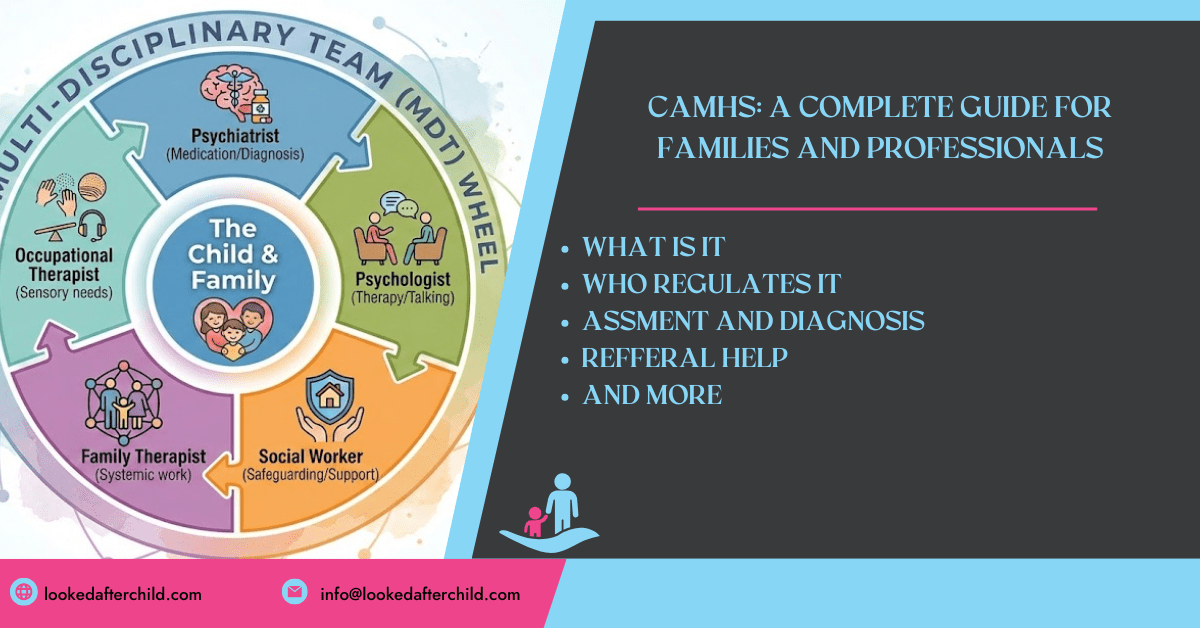
They usually have both. CAMHS uses a Multi-Disciplinary Team (MDT) approach. Your child might see:
- Psychiatrists: Medical doctors who can diagnose conditions and prescribe medication.
- Psychologists: Specialists in talking therapies (CBT, psychotherapy) and psychological assessment.
- Mental Health Nurses: Who often handle day-to-day support and medication reviews.
- Family Therapists: Who work with the whole family unit to improve communication.
How to Get Help: Referrals
How do I get a referral?
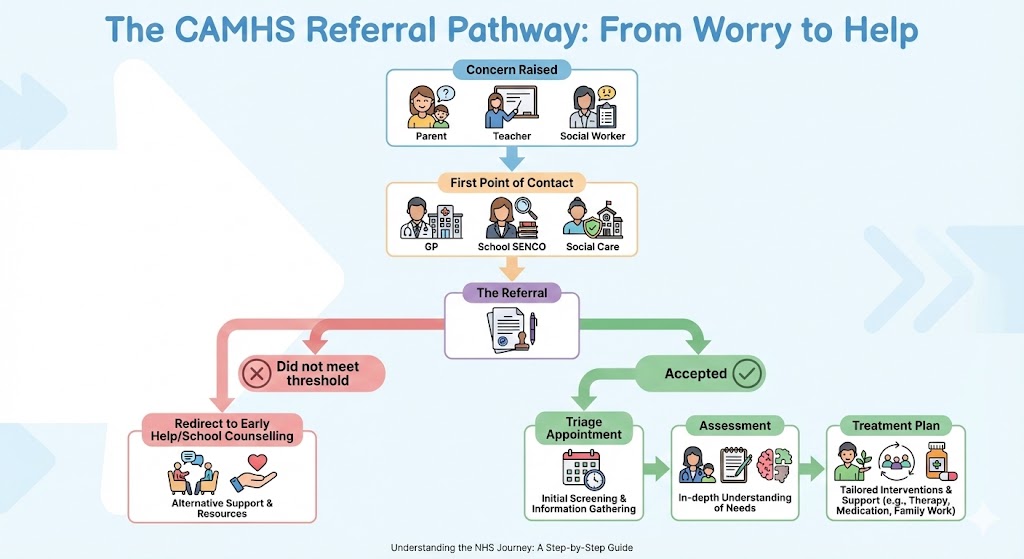
Most CAMHS teams accept referrals from professionals who know the child, such as:
- GPs (General Practitioners)
- SENCOs (Special Educational Needs Coordinators) or teachers
- Social Workers
Can I refer myself? In some NHS trusts, self-referral (by parents or young people) is possible, but this is not standard everywhere. You must check your local NHS trust’s website.
Li’s Note: If you are a social worker or foster carer, ensure your referral explicitly details the impact of early childhood trauma. A generic referral for “behavioural issues” often gets rejected. Frame it around “attachment trauma” or “emotional dysregulation” to ensure it hits the threshold for specialist support.
CAMHS and Children in Care
For those of us in the “Looked After” sector, the relationship with CAMHS is critical but often frustrating.
Do Children in Care get priority?
Statutory guidance often states that Looked After Children (LAC) should be prioritized for mental health assessments. However, the reality is often a “postcode lottery.”
- Dedicated Teams: Some areas have dedicated “LAC CAMHS” or “Targeted” teams specifically for children in care. These professionals understand the nuances of placement moves and attachment disorders better than generic teams.
- Health Assessments: Every child entering care must have a health assessment. If mental health concerns are flagged here, the social worker should push for a direct referral.
The “Stability” Trap
A common issue foster carers face is CAMHS refusing to treat a child until their placement is “stable.”
- The Argument: Therapy cannot work if the child doesn’t feel safe.
- The Reality: The child is often unstable because they need therapy.
- The Fix: If you encounter this, challenge it. Quote the NICE guidelines regarding therapeutic interventions for children in care. We must advocate that treatment often creates stability, not the other way around.
The “Cliff Edge”: Transition to AMHS
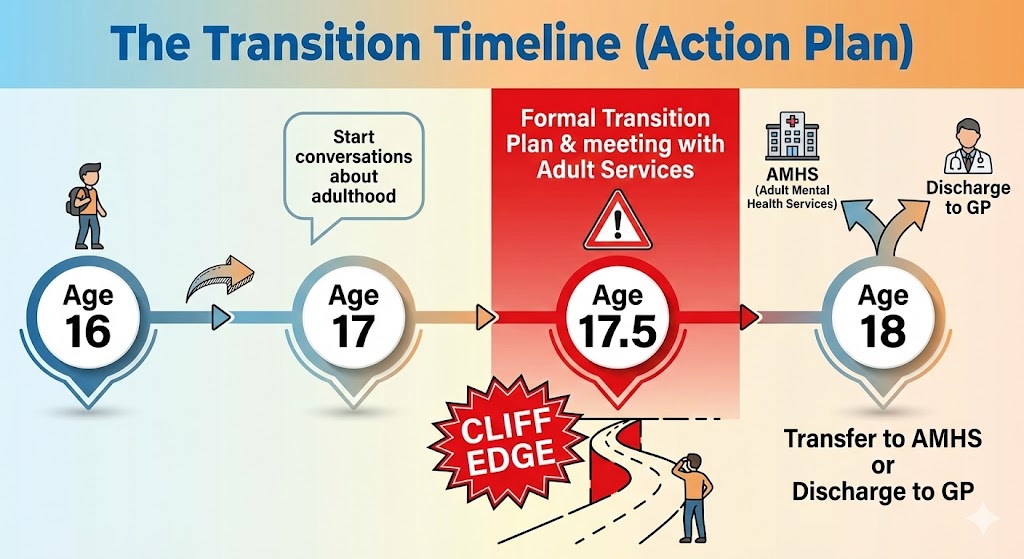
One of the biggest risks for our young people is the transition to Adult Mental Health Services (AMHS).
What is the transition?
When a young person turns 18, they legally become an adult. If they still need support, they must transfer from CAMHS to AMHS.
Why is it difficult?
- Different Thresholds: AMHS often has a much higher threshold for intervention. A young person supported by CAMHS might be told they are “not unwell enough” for adult services.
- Culture Shock: CAMHS is family-oriented and holistic. AMHS is patient-centered and often expects the young person to manage their own appointments and medication.
How to manage it
Planning should start 6 months before the 18th birthday.
- Request a Transition Plan: Do not wait for the birthday. Ask the CAMHS care coordinator for a written transition plan at age 17.5.
- Advocacy: If the young person is a care leaver, their Personal Advisor (PA) must be involved in these meetings to bridge the gap.

0 Comments