

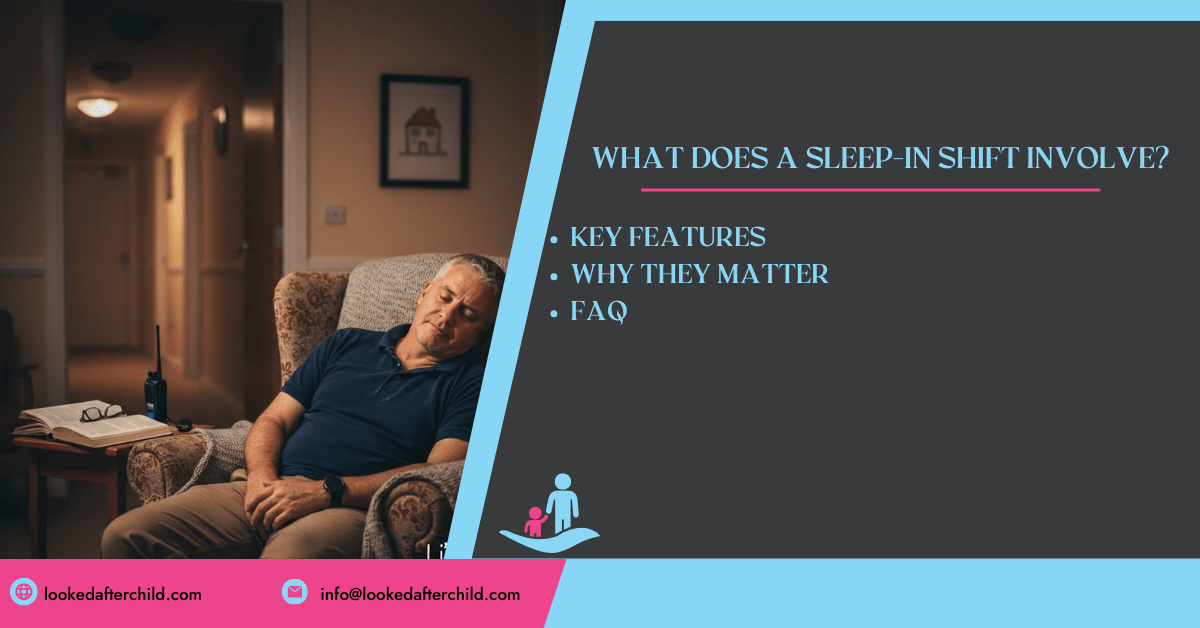
A sleep-in shift typically begins in the evening and ends the following morning. While the staff member is there to rest, they are “on-call” to respond immediately to any incidents, emotional distress, or emergencies that arise during the night.
Table Of Contents
Key Features of a Sleep-In:
- Presence and Safety: The primary goal is to ensure that children and young people feel safe knowing a trusted adult is nearby.
- Emergency Response: If a child has a nightmare, feels unwell, or if there is a building emergency (like a fire alarm), the staff member must wake up and take charge immediately.
- Transition Support: Often, the person doing the sleep-in will assist with the “wind-down” routine in the evening and the “wake-up” routine the next morning.
Why Sleep-Ins Matter (The Lived Experience)
From my experience, the quality of a sleep-in shift is a cornerstone of Trustworthiness and Experience (E-E-A-T) in a care setting. For a child in care, knowing that “Li” or “Sarah” is just in the next room provides a sense of security that is vital for emotional regulation and recovery from trauma.
- For Professionals: It is a demanding role that requires the ability to switch from deep sleep to professional crisis management in seconds.
- For Families: It offers reassurance that your child is not alone at night and that professional oversight is constant.
- For Care-Experienced Young People: It represents the “safety net” that allows you to rest easy, knowing you are protected.
FAQ
Is a sleep-in the same as a “waking night”?
No. During a waking night shift, the staff member must remain awake and alert for the entire duration of the night. During a sleep-in, the staff member is expected to sleep unless they are needed.
Are staff paid for sleep-ins?
Yes, though the pay structure for sleep-ins has been a subject of significant legal discussion regarding the National Minimum Wage. Usually, it is paid as a flat rate or “allowance” for the night, plus the hourly rate for any time they are actually woken up to work.
How can I make a sleep-in shift better for a child?
In my blog posts, I often suggest that consistency is key. Having the same familiar faces performing sleep-ins helps build the Expertise and Trust necessary for a stable environment.
Li’s Insight: “A sleep-in isn’t just a shift; it’s a promise of presence. For a child who has experienced instability, knowing that someone is there while the world is dark is one of the most powerful forms of advocacy we can offer.”

0 Comments