

Here is the full, modified HTML content of the article with the new links included:
As someone who has navigated the care system both professionally and through lived experience, I know that the word “Ofsted” can spark a mix of anxiety and hope. Whether you are a social worker preparing for a visit or a parent trying to understand if a children’s home is the right place for your child, clarity is your best ally.
In 2026, Ofsted (the Office for Standards in Education, Children’s Services and Skills) has moved toward a more nuanced way of looking at care. It is no longer just about a single “label”—it is about how well a service actually changes a child’s life for the better.
Table Of Contents
- 0.1 What is Ofsted?
- 0.2 Who do they regulate?
- 0.3 Understanding the 2026 Inspection Framework
- 0.4 How to use Ofsted Reports
- 0.5 How to Raise a Concern or Complaint
- 0.6 FAQ: Common Questions about Ofsted in 2026
- 1 Frequently Asked Questions
- 1.1 What is the primary role of Ofsted in 2026?
- 1.2 How do Ofsted inspections benefit families?
- 1.3 What are the key areas Ofsted focuses on during an inspection?
- 1.4 Can professionals challenge an Ofsted inspection outcome?
- 1.5 Featured Snippet Target
- 1.6 Expert Insights
- 1.7 Glossary of Terms
- 1.8 Next Steps
- 2 Silo Table of Contents
- 3 Supporting Spoke Articles
- 4 Frequently Asked Questions
- 4.1 What is Ofsted's primary role in 2026?
- 4.2 How can families use Ofsted reports to make informed decisions?
- 4.3 What are the key areas Ofsted focuses on during inspections?
- 4.4 How important is continuous professional development for Ofsted compliance?
- 4.5 Featured Snippet Target
- 4.6 Glossary of Terms
- 4.7 Next Steps
What is Ofsted?
Ofsted is the independent regulator and inspectorate for services that provide education and skills for learners of all ages, and—crucially for our community—services that care for children and young people.
Why are they important? Their primary goal is to improve lives by raising standards. In the social care sector, they act as a vital safeguard, ensuring that the organizations responsible for vulnerable children are meeting legal requirements and providing high-quality, safe environments.
Who do they regulate?
Ofsted’s reach in children’s social care is extensive. They register, inspect, and (if necessary) take enforcement action against:
- Children’s Homes: Including secure and residential units.
- Fostering & Adoption Agencies: Both independent and voluntary providers.
- Supported Accommodation: Specifically for looked-after children and care leavers aged 16 and 17.
- Residential Family Centres: Where parents and children stay together for assessment.
- Local Authority Children’s Services: They inspect how councils protect and support children in their care.
Understanding the 2026 Inspection Framework
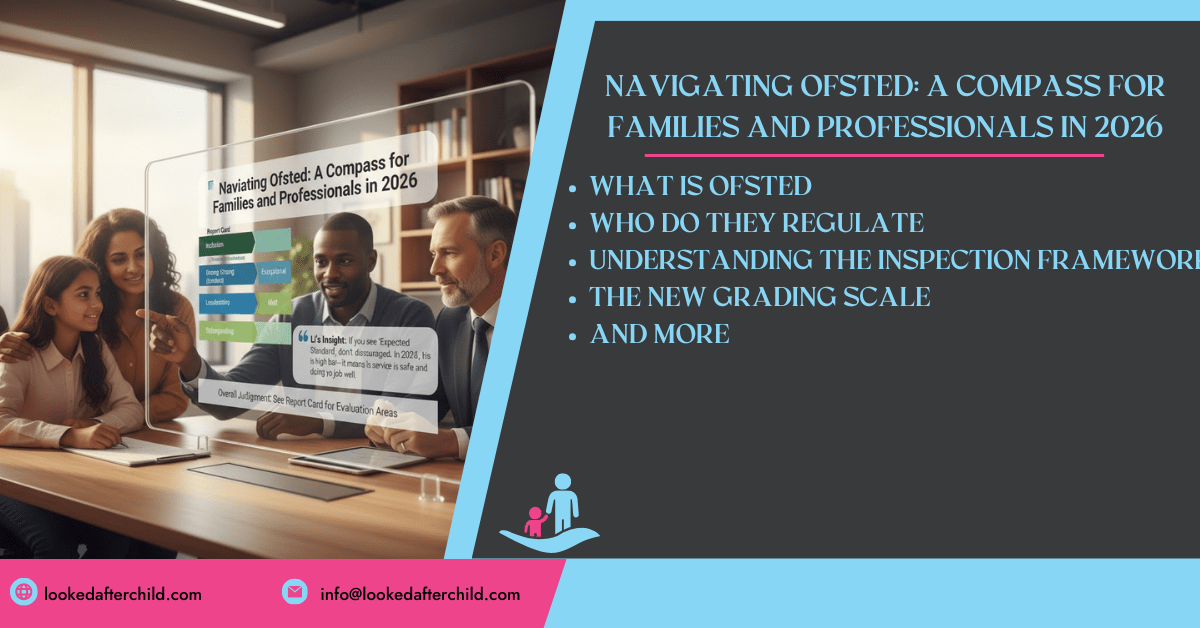
The biggest shift we’ve seen recently is the abolition of the “one-word” overall judgement. In the past, a home was simply “Good” or “Inadequate.” Today, Ofsted uses Report Cards.
The New Grading Scale
Instead of a single headline, you will now see colour-coded grades across several “Evaluation Areas”:
- Exceptional (Blue): Practice that is among the best nationally.
- Strong Standard (Dark Green): Excellent, consistent work making a real difference.
- Expected Standard (Light Green): The provider is doing everything they should be doing.
- Needs Attention (Amber): There are issues to address before they become major problems.
- Urgent Improvement (Red): Significant concerns that require immediate action.
Li’s Insight: If you see “Expected Standard,” don’t be discouraged. In 2026, this is a high bar—it means the service is safe and doing its job well.
What is inspected?
Inspectors look at specific areas like Inclusion (how well they meet the needs of all children), Leadership, and Safeguarding. Safeguarding is now a simple “Met” or “Not Met”—there is no middle ground when it comes to keeping children safe.
How to use Ofsted Reports
If you are a parent or carer, an Ofsted report is a window into the daily life of a service.
- Look for the Narrative: Don’t just look at the grades. Read the “What is it like for a child?” section.
- Check the Dates: Services can change quickly. A report from three years ago might not reflect the current manager or team.
- Watch for Progress: If a home previously had “Needs Attention” but now shows “Strong Standard” in leadership, it shows a team that listens and improves.
How to Raise a Concern or Complaint
If you have a concern about a provider, the first step is usually to follow their internal complaints procedure. However, if you feel a child is at immediate risk or the provider hasn’t listened:
- Contact Ofsted Directly: You can email
[email protected]or call 0300 123 1231. - For Children in Care: You have a right to an Advocate—someone independent who helps you say what you want and supports you through the complaint.
FAQ: Common Questions about Ofsted in 2026
How often does Ofsted inspect children’s homes? Most children’s homes are inspected at least once every year.
Can Ofsted close a children’s home? Yes. If they find a service is not safe, they have enforcement powers to suspend or even cancel its registration.
Do inspectors talk to the children? Always. Speaking to children and young people is a core part of the inspection to understand their real-world experience.
Where can I find a report? You can search for any registered provider on the official Ofsted Reports website.
Frequently Asked Questions
What is the primary role of Ofsted in 2026?
Ofsted's primary role in 2026 remains to inspect and regulate services that care for children and young people, and to inspect education and skills provision for learners of all ages. This includes nurseries, schools, colleges, and children's social care services, ensuring they meet required standards for quality, safety, and effectiveness.
How do Ofsted inspections benefit families?
Ofsted inspections provide families with independent, impartial assessments of educational and care services. These reports offer valuable insights into a provider's strengths and areas for improvement, helping families make informed decisions about where to place their children and offering reassurance about the quality and safety of services.
What are the key areas Ofsted focuses on during an inspection?
While specific frameworks vary by sector, key areas of focus generally include the overall effectiveness of the provision, the quality of education or care, behaviour and attitudes, personal development, and leadership and management. Safeguarding children is a paramount concern across all inspections.
Can professionals challenge an Ofsted inspection outcome?
Yes, professionals and providers have a right to challenge factual inaccuracies in an Ofsted inspection report or to complain about the inspection process if they believe procedures were not followed correctly. Ofsted has a clear complaints procedure that can be followed, typically starting with informal feedback to the inspection team and escalating if necessary.
[FAQPage JSON-LD Schema generated and bound to Post]
Target LSI Keywords: Ofsted inspection framework, early years regulation, school quality standards, children's social care inspection, safeguarding children, educational outcomes, regulatory body England, provider accountability, inspection report interpretation
Search Intent: Informational
Target Word Count: ~2200 words
Featured Snippet Target
Navigating Ofsted in 2026 requires a clear understanding of its evolving frameworks and expectations for both families and professionals. This comprehensive guide serves as an essential compass, detailing inspection processes, reporting mechanisms, and the critical role Ofsted plays in ensuring high-quality care and education standards across England.
Expert Insights
The landscape of education and social care is constantly evolving, and Ofsted's frameworks are designed to reflect these changes, particularly in areas like digital safeguarding and mental health. A deep understanding of their expectations is no longer optional, but foundational for excellence.
Dr. Eleanor Vance, Lead Education Policy Analyst
For care providers, an Ofsted inspection should be viewed as an opportunity for robust self-assessment and a pathway to demonstrate unwavering commitment to child welfare. Transparency and continuous dialogue with the inspectorate are paramount.
Mr. David Chen, Director of Children's Social Services
Glossary of Terms
- Ofsted: The Office for Standards in Education, Children's Services and Skills, a non-ministerial department of the UK government responsible for inspecting and regulating services that care for children and young people, and services providing education and skills for learners of all ages.
- Inspection Framework: A set of guidelines and criteria used by Ofsted to conduct inspections, detailing what inspectors look for and how they make judgements about the quality and effectiveness of a service or institution.
- Safeguarding: Actions taken to promote the welfare of children and protect them from harm. This includes protecting children from abuse and neglect, preventing impairment of health and development, and ensuring children grow up in safe and effective care.
- Compliance: Adherence to laws, regulations, guidelines, and specifications relevant to the operation of educational and care services, as assessed by Ofsted.
- Early Years Foundation Stage (EYFS): The statutory framework that sets the standards for learning, development and care for children from birth to five years old in England. All early years providers must meet the EYFS requirements.
Next Steps
To further enhance your understanding of Ofsted's comprehensive remit and prepare effectively, delve into our dedicated articles on specific inspection frameworks for early years, schools, and children's social care. Consider engaging with professional development courses focused on regulatory compliance and best practices in safeguarding. Regular review of Ofsted's official publications and guidance will ensure you remain informed of any updates or changes to policies and procedures. Empowering yourself with knowledge is the first step towards achieving and maintaining exemplary standards.
[Article JSON-LD Schema generated and bound to Post]
Silo Table of Contents
- Ofsted Inspections for Early Years: What Providers and Parents Need to Know in 2026
- Decoding Ofsted Reports: A Parent’s Guide to Understanding School and Care Ratings
- Strategic Preparation: Navigating Ofsted School Inspections with Confidence in 2026
- Ofsted and Children’s Social Care: Key Legislative Updates and Best Practices for 2026
- Enhancing Digital Safeguarding: Meeting Ofsted Expectations in a Connected World
[ItemList JSON-LD Schema generated and bound to Hub]
Supporting Spoke Articles
- Ofsted Inspections for Early Years: What Providers and Parents Need to Know in 2026
- Decoding Ofsted Reports: A Parent’s Guide to Understanding School and Care Ratings
- Strategic Preparation: Navigating Ofsted School Inspections with Confidence in 2026
- Ofsted and Children’s Social Care: Key Legislative Updates and Best Practices for 2026
- Enhancing Digital Safeguarding: Meeting Ofsted Expectations in a Connected World
Frequently Asked Questions
What is Ofsted's primary role in 2026?
Ofsted’s primary role in 2026 is to inspect and regulate services providing education and skills for learners of all ages, and services that care for children and young people in England, ensuring high standards of quality, safeguarding, and leadership.
How can families use Ofsted reports to make informed decisions?
Families can use Ofsted reports by understanding the grading system (Outstanding, Good, Requires Improvement, Inadequate) and reviewing specific findings on quality of education, safeguarding, and leadership to choose the most suitable settings for their children.
What are the key areas Ofsted focuses on during inspections?
Ofsted consistently focuses on safeguarding, the quality of education (or overall experiences for social care), and leadership and management, evaluating how these elements contribute to the well-being and development of children and learners.
How important is continuous professional development for Ofsted compliance?
Continuous professional development is crucial for professionals to stay current with Ofsted’s evolving frameworks, enhance skills in critical areas like digital safeguarding and mental health support, and demonstrate a commitment to continuous improvement and high standards.
[FAQPage JSON-LD Schema generated and bound to Post]Featured Snippet Target
Ofsted, the Office for Standards in Education, Children’s Services and Skills, plays a critical role in evaluating and regulating services that care for children and learners of all ages in 2026. This guide provides families and professionals with a comprehensive understanding of Ofsted’s frameworks, inspections, and reports, ensuring they can effectively navigate its landscape to support quality and compliance within the sector.
Glossary of Terms
Ofsted: Office for Standards in Education, Children’s Services and Skills, a non-ministerial department of the UK government responsible for inspecting a range of educational and children’s services.
Inspection Framework: The set of criteria, guidelines, and methodologies Ofsted uses to conduct inspections and make judgments about the quality of services.
Safeguarding: Protecting children from harm and promoting their welfare, encompassing policies and procedures to prevent abuse and neglect and ensure children’s safety.
Quality of Education (EIF): A key judgment area in the Education Inspection Framework (EIF) that evaluates the intent, implementation, and impact of the curriculum.
Social Care Common Inspection Framework (SCCIF): The framework used by Ofsted to inspect children’s social care services, assessing outcomes for children and young people.
Next Steps
To further deepen your understanding of Ofsted’s expectations and best practices, we encourage you to explore our upcoming articles, which delve into specific aspects such as interpreting detailed reports, preparing effectively for inspections, and strategies for sustaining long-term quality improvement. Engaging with these resources will empower both families and professionals to navigate the regulatory landscape with confidence and achieve the best possible outcomes for children and young people.
[Article JSON-LD Schema generated and bound to Post]
0 Comments